Thank you! Your submission has been received!
Oops! Something went wrong while submitting the form.
MENU

To help you get ready for the month ahead we’ve created some motivational wallpapers for your phone and desktop computer. There are few betters ways to start the workday than sitting down, starting your computer up, and being greeted with a beautiful wallpaper background or screensaver.
Every month we’ll have a new inspirational desktop wallpaper for you to use to refresh your workspace and one for your smartphone too. We hope these motivational backgrounds make you a little more excited to sit down and get to work this month on whatever it is you’re creating.
Click the CTA bar above. And then enter your email address when prompted. The wallpapers and backgrounds will then download as a zip file that you can open and choose your favorite wallpaper for. Maybe you’ll even use more than one throughout the month!
These inspirational backgrounds are available for you to download above. They include inspirational quotes wallpapers and calendars to help you stay organized and motivated. The motivational wallpapers are perfect for creators looking for that extra push when it comes to working on their online courses, digital downloads, or online coaching.
Your workspace can set the tone for your work. So it’s important for you to feel confident and cheerful while working on all things entrepreneurship relate. Maybe you’re working on getting your online course business up and running. Or maybe you’re just beginning to dabble in creating digital content for your audience to download. Maybe you even feel a little stressed while working on finances.
Whatever it is, having a great wallpaper as the backdrop can becalming and make that little extra difference. Plus, it can offer you inspiration on those days when you’re feeling stuck. Or be a new mantra to keep you in the groove.
You could even offer your audience your own wallpapers that you’ve designed. It could be the opportunity you’ve been looking for to break into selling your first digital downloads. We hope that in offering these wallpapers and backgrounds each month we give you something to lighten up your space that you can look forward to.
Check this blog post each month to get the latest backgrounds and wallpapers. We’ll be updating them at the start of the month. And we’ll be sure to share them each month in our In The Know newsletter that we send each week on Thursdays. To stay up-to-date with the latest Teachable and creator news, and to get the latest wallpapers, be sure to sign up for the newsletter.
Remember, you’ve got everything you need to become the creator you want to be, and for everything else, we’re here to help! Check out more on the blog for great resources as well as our Instagram and Knowledge Base for any support you need using the platform. If you want o learn more about the pricing for Teachable, check out our pricing page, or sign up for a free plan to try it out.
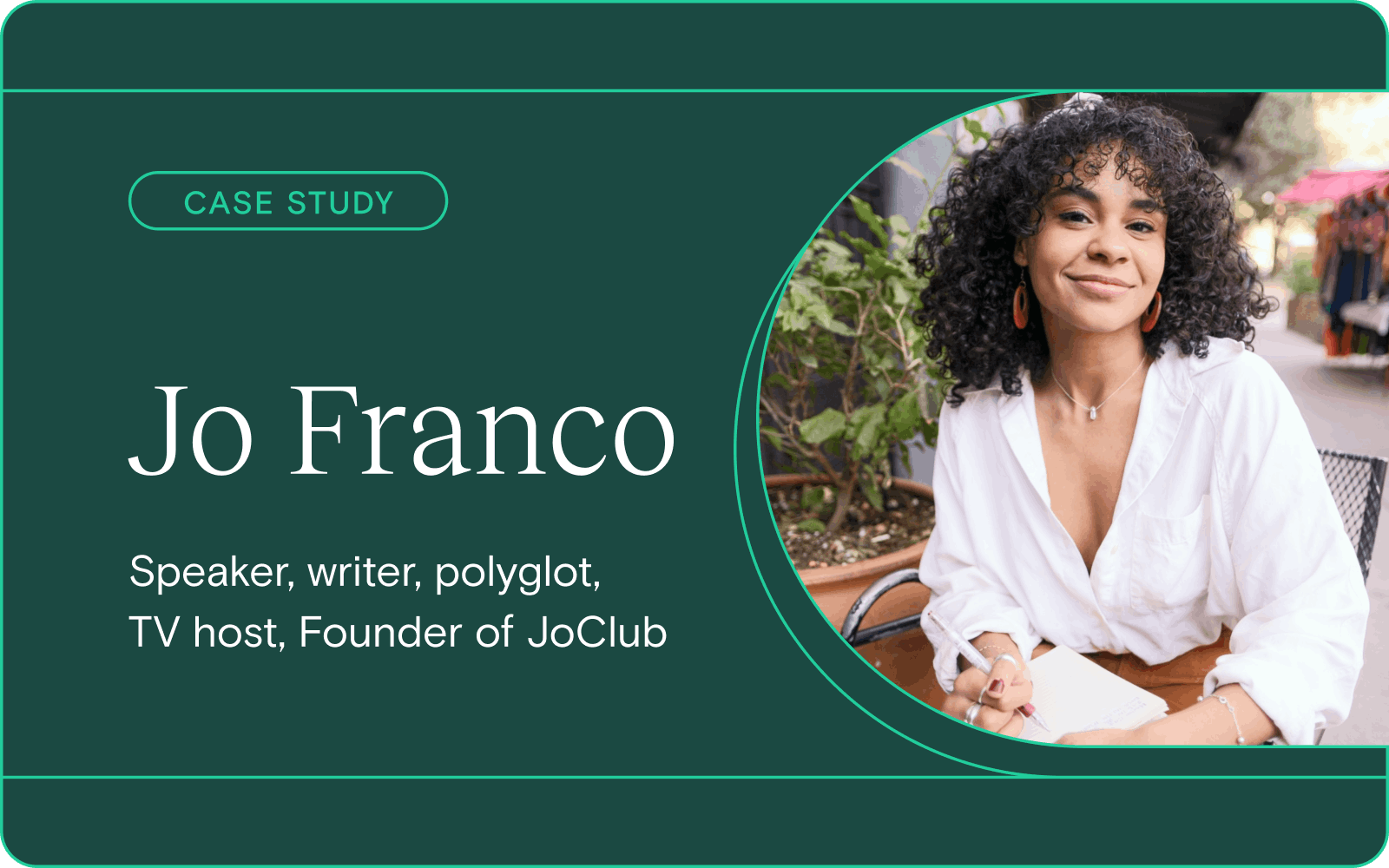
You may recognize Jo Franco from the Netflix show “World’s Most Amazing Vacation Rentals” exploring beautiful vacation rentals and sharing her travels with the world. But, she wasn’t always staying in a unique rental all over the globe with a camera crew in tow.
As a long-time content creator, world traveler, polyglot, and journal keeper, Jo Franco has a lot to share with her audience. She started her content creation journey over a decade ago on YouTube, sharing her adventures traveling with the world and learning through those experiences. And that’s exactly what helped her land a show on Netflix. However, it all came to a grinding halt in 2020 when the COVID-19 pandemic began.
At first, she was at a loss for what to do and how to create content without travel. So, she turned to her Instagram audience to talk through her feelings of anxiety and fear. “Throughout my travels, I had been journaling in secrecy,” she said. “And journaling was such a big piece of my life that I had never shared.”
During the pandemic out of sheer desperation and anxiety, Jo posted some of her journal entries and thoughts to her followers, without thinking much of it. “I posted because I was like, ‘Yo the world’s ending. Here’s how I really feel’,” she told Teachable. That’s where her online community and membership, Jo Club, started.
For Jo, journaling was a consistent hobby she had in her life. Even throughout the years of YouTube creation, and a Netflix series, she was always journaling. So, with the encouragement of her audience, she started a 30-day journaling challenge, providing them with prompts, sharing responses, and building a community. That 30-day challenge ended up lasting 90 days.
“And then I asked myself, what would happen if I put everybody in a Zoom room and just had a dope global conversation?” she said. “And this is when Jo Club was born, where you could sign up for the membership, and you would get access to a live journaling call,” she explained. Initially, 12 people joined the call. But, in the three years since, the concept has remained while the community has grown to include not only individuals, but universities and corporate clients too.
“It is not easy to make a pivot, but I feel like journaling is actually ironically connected to how I discovered that I didn’t want to keep doing just travel content,” Jo said. But she found that she had created golden handcuffs for herself. She was traveling in luxury and seeing the world, but she was missing family events, birthdays, and she wanted to make a change.
Jo Club, and eventually Teachable, is what gave her the opportunity to break free from the need to travel to make her content. “It was a bit of a mixing and matching of what is important to me. How can I make money? And how can I make the world a better place?” she said.
The number one thing Jo wanted to provide to people was value—something that could help make a difference in their lives and was different from what was already out there. The journaling prompts and content in Jo Club are only part of the value members get from being a part of the membership. They also get to draw from the community, live journaling calls, and journaling parties. People from all over the world come together to share what they learned while completing the journaling prompts or the challenge they signed up for.
“For the first two years of Jo club, I was just mastering the format of what it is to run a live journaling call,” she said. After she perfected that, she took her content to Teachable and created 21-day challenges for her community. “I recorded 21 videos, plus five onboarding videos.” Every week, Jo had live journaling calls. She also utilized the drip feature to host the challenge experience. Lastly, she would host journaling parties for her community. By the end of the year, she’ll have six different challenges her audience can choose from.
“From the very inception of Jo Club, my motto was always: You are building this with me. I build things for you,” Jo said. She has found success in working with her community members to build what they’re looking for. In fact, she recognizes that she’s not in the business of selling a journaling course.
“I’m selling transformation,” she said. “You come into Jo Club because you want to evolve,” she said. Jo’s team has identified archetypes for her members so they can serve them in the best way possible.
It’s this work that helps keep her community strong and helps make it more diverse and inclusive of every experience and need there could be.

The following is a Q&A with Dr. Ramani Durvasula. She is a licensed clinical psychologist, professor, and author. She specializes in the etiology and impact of narcissism and high-conflict, entitled, antagonistic personality styles on human relationships, mental health, and societal expectations. On Teachable she teaches others to heal from narcissistic abuse and offers a place of healing, learning, and connection for her students. The following interview has been edited for clarity and length.
May is Mental Health Awareness, and all too frequently creators and small business owners find themselves experiencing feelings of anxiety, burnout, imposter syndrome, and depression. We spoke with clinical psychologist Dr. Ramani Durvasula about what creators specifically can do to take care of their mental health.
Dr. Durvasula: Common signs of burnout include fatigue and exhaustion, depression, irritability, low energy, lack of motivation, social isolation, apathy, and detachment from work and other activities of life. In content creators, this may show up as feeling disengaged from their content, feeling like they are “phoning it in,” resent of the need to engage with followers and having to create new content, and in essence losing sight of why they started doing this in the first place.
Develop and nurture your sources of support. This can be people you can call on in your social circle, people on your team, collaborators, other people in the content generation space, and therapy. There is a real disconnect between what the world sees (they think you are always together and having the time of your life creating content) and what it really is (idea generation, editing, moderation, never really getting a day off.) So having safe spaces where you feel seen, heard, validated, and safe can help you weather the dark nights of the creator’s soul!
Anxiety. First of all, anxiety may be one of the most common mental health challenges and issues out there, but it can show up in many ways for creators. There is the pressure to constantly be generating new ideas. [Creators are] never really getting a break because there is always the pressure for new, more, and different content. There’s the cruelty of trolls (the internet is a mean place!),and the pressure to stay ahead of the curve, the social comparison that comes when you see another creator’s booming platform, and living what can feel like a disconnect. And there’s that perpetual “imposter syndrome” fear that plagues so many creators. Remember, anxiety is a fear about something that has not happened or that we have constructed in our head, but it feels so real.
Self-compassion is so important for creators. Self-kindness instead of judging yourself. Recognizing that all content creators feel the same way, and recognizing that anxiety, fear, worry, any feeling—will pass, even if you are worried you will always feel stuck. Talking to other content creators helps. But it is also important you have a life outside of the content you create—something that is yours like a hobby, private time that you don’t document for the world, exercise, or other daily practices. You also need times when you shut the devices off.
Getting lost in a great TV show or movie, being in my own therapy, dealing with problems or issues that aren’t related to my content, travel—even if it is for work (the change of scene can be an eye opener and perspective shifter), and having a routine. I am an introvert, so when I am really stressed, I try to work or do things alone. And I believe sleep can solve anything. I may be despairing as a day goes on, but a good night’s sleep will often calibrate me.

The space where a creator works can be one of the most personal spaces they have at their disposal. Whether you create from home or you have a studio somewhere else, where you create has a direct impact on what you create. Our column “Where I create” will take you where Teachable creators do their most important work. We’ll feature a new creator’s space each month to inspire others.
On any given day Gwenydd Jones, the creator of the Teachable school The Translator’s Studio, could be anywhere in the world. When we spoke with her, she happened to be in the Swiss Alps. She and her husband are digital nomads, making their way around the globe while running their business online.
They’re in the process of building a new house in Spain, but while waiting for it to be done, they needed a place to stay. “We were like, well we could just rent an apartment here in Seville. Or we can become house sitters and go travel around and see where we land. And so that is how I come to be here today,” Gwenydd said.
Gwenydd and her husband run The Translator’s Studio on Teachable, a school that helps students learn to become translators and pass the professional exams required. Their courses can help students who are just starting out all the way to those becoming professional translators.
Gwenydd has been a translator since 2009 when she passed the DipTrans exams she now teaches others to pass. “I did two master’s degrees in translation, one in translation and one in legal translation, and I sat the exam, the DipTrans, and I failed it,” she said. “And then I came back and passed it. And that’s kind of what inspired me to start writing these courses because I thought that I could offer more vocational-focused training or practical training for translators,” Gweyndd said.
She released her first course in 2014 as a large PDF file. And she was initially just sending it out as a large zip file. Which she admits, wasn’t the most professional or sustainable way to run her business. Luckily, she later found Teachable.
As Gwenydd’s online business grew she decided to invest in some business mentoring. Which led her to make the decision to invest in an education platform to help her share her courses better. “I’m very glad I did, I did it actually before just before the pandemic,” she said. “I was well set up and was able to sell quite a lot of courses during that time because people suddenly found themselves with time and looking for online courses,” she said.
And the success hasn’t stopped there. She said her business has continued to grow along with Teachable over the last three years. Which in turn allows her and her husband to live their lives as digital nomads.
Due to the fact that she’s always on the go and changing locations, Gwenydd doesn’t have one home office. Her office is whatever home she happens to be in that day. Sometimes that means she has a view of mountains, other times, it’s a view of the beach or a city street. And sometimes she has co-workers in the form of pets that belong to the owner of the home she’s house-sitting.
What she does take with her to every location? Her rituals. “I can’t take my space with me, so it’s really important to me that I follow rituals,” she said. It’s important for her to write every day, so she structures her day so that she can wake up, write, and then have breakfast. Then she prioritizes whatever else she’s focusing on that day. “By thinking like that, I’m able to focus on the work I want to get done and not get distracted by things like gorgeous cats (she’s pet sitting,) and just being in a nice new city,” she said.
But there are some technical items that help her get settled in too. She’s narrowed them down to the minimum of what she needs in order to travel light. She brings her laptop, a stand for it, and a mouse that she can pack up. But one thing sets the tone and makes whatever space she’s in feel like her office: a coaster.
“As long as I’ve kind of got this ritual in place, then I’m able to sit and focus. And I have this little coaster that always goes in my suitcase. And so I lay out my computer, and I put my coaster down so I can put my cup of tea there. And then I’m like, ‘Okay, yeah, it’s just a coaster but it creates my working space,'” she said.
Do you want to share your workspace? Reach out to nina@teachable.com

Discussions around a potential TikTok ban or sale to an American company are ongoing. And with the fate of TikTok hanging in the balance, more and more creators are looking for potential alternatives. But many of them have looked no further than the app Lemon8.
Creators are describing Lemon8 as a mix between Pinterest and Instagram. Lemon8 is an app owned by TikTok’s parent company ByteDance. It’s a photo and video-sharing app that creators who consistently use other social media platforms have been advertised to use, according to The New York Times.
The description of the app on the App Store reads: “Lemon8 is a content sharing platform with a youthful community. Here is where you can discover beautiful, authentic, and diverse content. It is THE destination for sharing and exploring.”
But there is no vertical scrolling in the app like Instagram reels and TikTok users as accustomed to. And instead of the app serving up any and all content, the content on Lemon8 is centered around a specific topic. And Lemon8 has its own photo editing tools built in too.
The app gained significant popularity in the last few weeks. During the final days of March the app entered the top 200 apps in the App Store for the first time, TechCrunch reported. And as of April 5, it was ranked #3 in the Lifestyle section of the App Store.
ByteDance is Lemon8’s parent company, yes, the same ByteDance that owns TikTok. And TikTok is facing continued turmoil in Congress. So it makes sense that ByteDance would be concerned with safeguarding its user base in the United States. But it’s still unclear whether Lemon8 could eventually face the same fate as TikTok and be targeted for a potential ban.
In the meantime, it could be a good app for creators to explore.
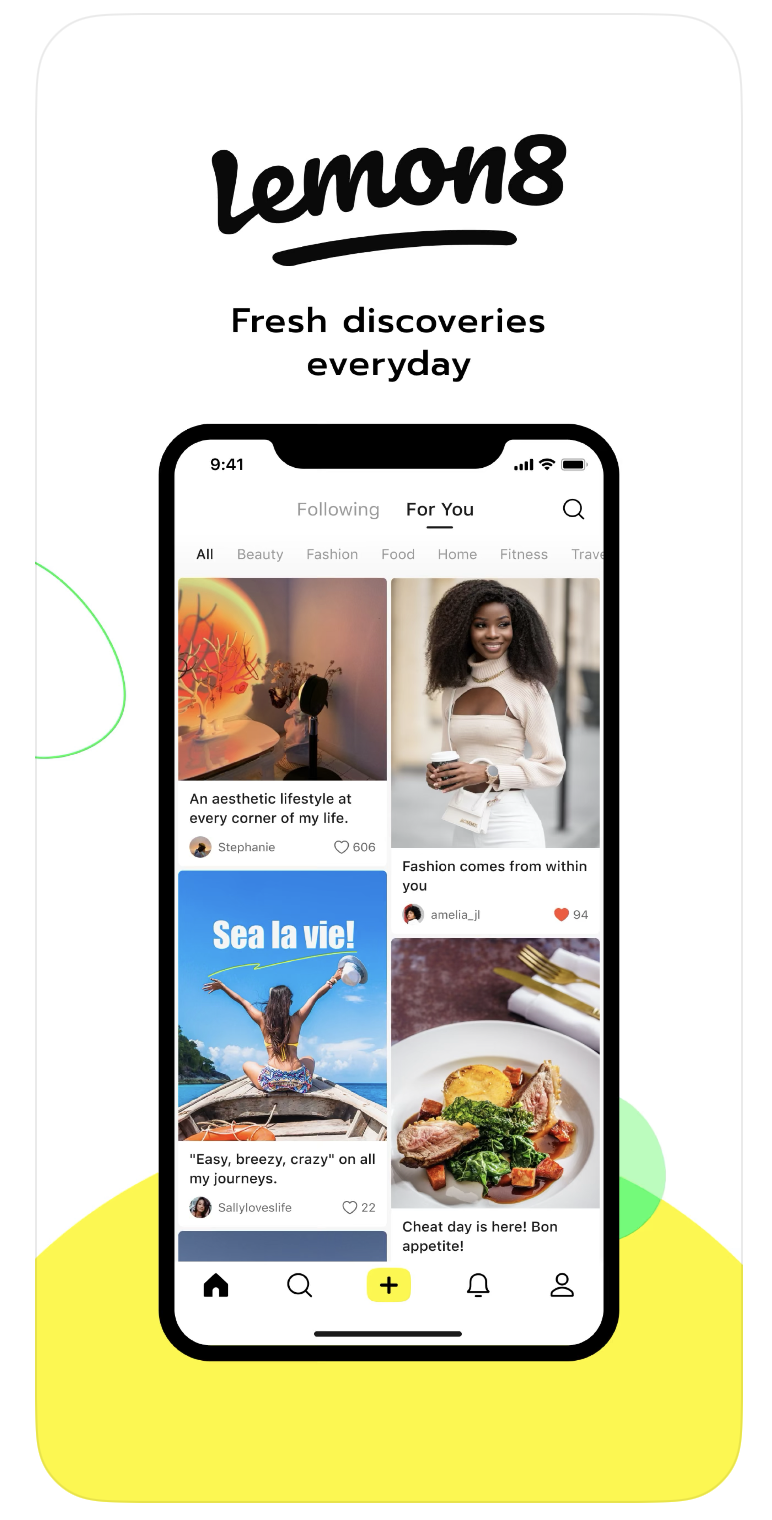
Lemon8 is available to creators in the App Store and on Google Play. The developer of the app is called Heliophilia Pte. Ltd. So when you search for the app and download it, be sure that you download the right one. The developer of the app you download should match that name.
The good news is: Creators can go ahead and download the app now! And they can sign up for an account to be one of the earliest users of the app. The app is free to download. And creators can start thinking about how Lemon8 can fit into their existing social media tools.
It could be a good idea for creators to sign up early so they get their preferred username. And so that they can figure out how to use the app sooner rather than later. Because it could be a big advantage to be able to use it and use it well if the app does continue to grow in popularity.

As more companies release their own artificial intelligence chatbots, it only makes sense that more people are trying them out. And that the conversation would center around them, especially for creators. While it can be tempting to push against this new technology, it can be more beneficial for you to embrace it instead.
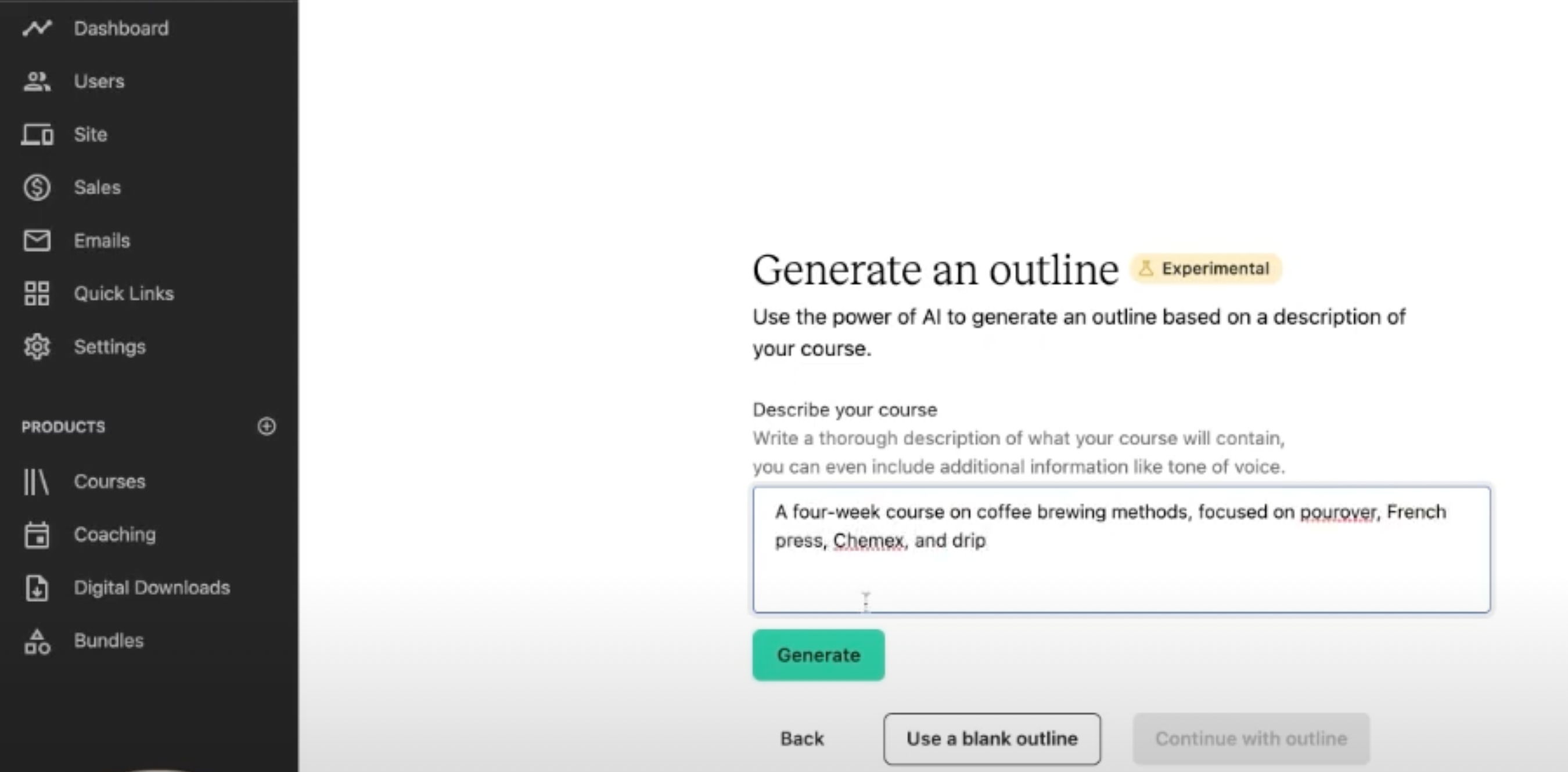
To help you do so, we released an AI-powered curriculum outline generator. So now instead of opening up a blank document and staring at it until inspiration strikes, you can get a head start using AI. The goal isn’t to have a bot create your course for you, just to have it help you get started.
{{aicurriculum-component="/blog-shortcodes/blog-cta"}}
It allows users to type in a question or request and it can return an essay, an outline, articles, and even poetry. So the designers and engineers here at Teachable took a look at this, and thought there’s got to be a way for us to use this to help creators.
And the result was an AI-powered curriculum outline generator.
We’re harnessing these new tools and adapting them to our platform to help creators work smarter, not harder.
This generator might be best if the following sounds familiar:
There are a few different ways you can use the generator to solve these problems. We’ll go over them and then you can decide whether it’s for you or not.
If you’re not sure quite what course you want to build yet, there’s no need to spend time mapping out a bunch of them. Instead you can use the generator to mock up a few different options for your course. Then you can edit them, combine them, or continue to make more to outline your course.
The curriculum generator can act as a partner in brainstorming for you. You can use it to help you come up with as many ideas as possible to consider. How many of those ideas you choose to run with is up to you.
Everyone has a hard time getting started. So we decided to help you get a jump start in creating with our AI-powered generator. It’s an experimental new tool designed to help creators. You have the expertise and know what you want to teach, but it can be hard to turn that expertise into a course outline. So you can think of this as your starting point. To help you defeat that writer’s block, the starter to your creative engine.
With our generator, you’ll just have to enter your course topic and a short description and it will create an outline for you. Then you can start working on filling in the gaps left over.
As new technology emerges we all have two options, to work with it or to work against it. So instead of resisting the use of it while others get ahead while utilizing it we figured why not give it a try. Creating this tool doesn’t mean we have to all create the same bland content. It just means we might be able to get a head start in creating our unique and compelling content. When you don’t have to use your creative energy on staring at a blank doc or empty page, you can spend more of it creating.
ChatGPT and other generative AI tools are pretty amazing and the technology behind it is groundbreaking. And it’s generated more than a little hand-wringing about the impacts on all manner of jobs, even ones traditionally “safe” from automation.
But here’s the thing. You’re building an online business to share what you know, not what the world knows. OpenAI’s secret sauce is that it has looked at a lot of content. But you’re teaching a course, or offering coaching services, or selling an ebook, because your audience wants to hear from you. And you have experiences that a bot could never emulate.
What’s new is how quickly ChatGPT and similar tools can turn out often incredible content. What’s not new is how accessible information is–that’s been true at least since the internet and Google brought it to our fingertips.
So look at ChatGPT, and our AI-powered curriculum outline generator as a tool but nothing more. It can help you get creative, maybe see something in a new light, and break through your writer’s block. It can help you build faster, especially if you’re an expert at something but aren’t (yet) an expert at translating that knowledge into an online course format.
So that’s why we’re here and why you’re here–to innovate together, to learn together.