Thank you! Your submission has been received!
Oops! Something went wrong while submitting the form.
MENU
Here's how to discover and identify your target audience to sell your online course. We'll show you some tried and true strategies.

One of the most valuable things you can do for your business is to find exactly who your target audience is. A lot of entrepreneurs think they know who they’re selling to when really they’re only scraping the surface of who is in their audience.
Read on to learn about the mistakes entrepreneurs make when they’re targeting people for their products.
Chances are, you and your audience will have things in common, in fact, you might have a lot in common. The thing is, you’re probably a few steps ahead of your target audience in whatever niche you’re selling to.
Rather than assuming your target audience is exactly like the person you are today, it’s better to think that they’re similar to who you were before you knew what you knew about your niche now.
Ask most new entrepreneurs who their audience is, and they’ll probably give you something vague. They might say, “Moms!” or “Artists!” or “Coders!” and that might be accurate, but it’s nowhere near detailed enough.
For example, if you say your target audience is moms, define what kind of mom you’re targeting. The empty nester seeking comfort in her children’s absence? The new mom who can’t get baby to sleep through the night? The stay-at-home mom who wants to plan educational activities for her elementary school aged kids?
Yes, your audience is moms, but not all moms are in the same season of motherhood or struggling with the same things. Get nitty gritty. This will help you find your target audience.
Believe it or not, a lot of entrepreneurs go into business knowing they want people to buy, but they never think twice about what kind of people they want to buy.
If you’re marketing your course to anyone who will listen, you’re shouting into the void. If you don’t know who your audience is, you can’t effectively market your product.
Taking the time to define your target audience and understand the people interacting with your business is one of the smartest things you can do. Luckily, the process is fairly simple.
I’m sure you have a vague idea of who you’re best suited to help. If not, ask yourself a few of these questions:
For example, you might be teaching a gardening course. Your gut might say, “My online course is for gardeners” But, think again.
There will be people who are very advanced gardeners who won’t benefit from your course because it’ll be too basic for them, or others who are such beginners that your course won’t help them, either. They need more hand-holding than your online course offers.
Instead, your course might be geared toward hobby gardeners who are looking to expand their gardening prowess and grow and can enough vegetables to last the winter.
Researching is the fun part. First, Google your course topic and related words and phrases.
Take a look at the results.
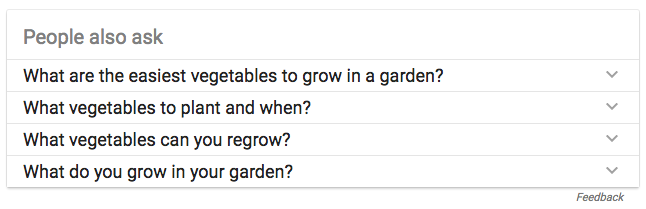
Check Quora and see what questions people are asking about your topic and dig into their profiles. It’ll help you find your target audience. What other things are they interested in, and where else do they spend their time? See how deeply you can dig and try to make predictions about who these people are.
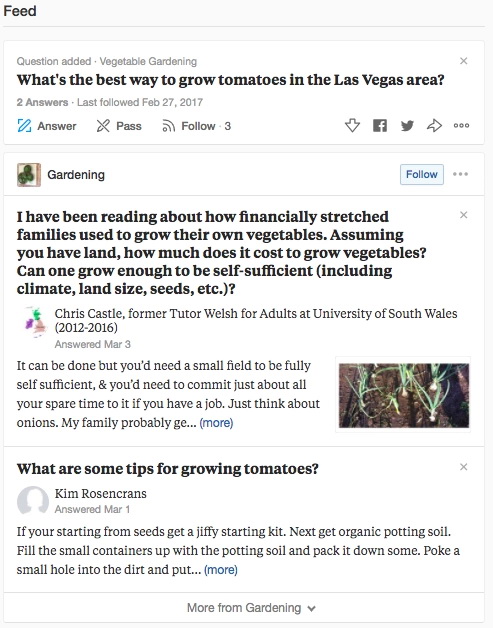
You might find in your research that the demographics most interested in growing their own produce are thrifty 30-somethings trying to go green, minimize their spending, and make a positive environmental impact.
With that in mind, you can better understand what kind of marketing is going to resonate with the people most likely to buy your course. Then it’ll be easier to find your target audience.
You’ve got your perfect course all mapped out and you’re ready to grow your audience so you can have a massive launch. Good for you!
Luckily, we’ve perfected our audience growing tactics and have created a fool-proof strategy for attracting your audience and adding them to your email list.
Now that you know who your audience is, you can create super-targeted marketing that will better resonate with them. The thing is, people are more likely to purchase if they feel like the product they’re buying was made to solve their very specific problem.
For instance, if you realize that your target audience is single moms to teenagers and work full-time, your marketing is going to be very different than it would be if you were selling to moms with 3 under 3. Knowing who your audience is helps you better speak their language.
