Thank you! Your submission has been received!
Oops! Something went wrong while submitting the form.
MENU

TL;DR: A personal brand is your story, skills, and values packaged so people recognize and trust you. The 10 examples below, spanning astrology, finance, design, coaching, and marketing, show a consistent pattern: clear tone and design, a distinct personality, and a one-line statement of the value you offer. A personal brand statement, one to three sentences saying who you help and how, is the fastest way to make that value legible, and the statement examples further down give you a template to adapt. The 5 As, authenticity, authority, aspiration, affinity, and appearance, round out what makes a brand work.
If you are a content creator looking for personal branding examples, it helps to study other successful people and how they have built their brands.
Most successful people, whether creators, entrepreneurs, startup CEOs, freelancers, or celebrities, build a personal brand. A strong personal brand helps you reach professional and personal goals.
Below are 10 personal branding examples from real creators, coaches, and course sellers, along with what makes each brand identity work and a set of personal brand statement examples you can adapt.
A personal brand is your story and how you present yourself to your audience. It demonstrates your unique qualities and skills, and it is how people come to recognize, remember, and trust you.
With a personal brand identity, you can connect with your target audience and stand apart from your competition.
Your personal brand is made up of several elements. Each one helps others get to know you and your value.
When creating your personal brand, include:
When you build your personal brand, you create a unique selling proposition for yourself. It is a way for people to understand and remember you and your brand.
The primary benefits of personal branding are:
Personal branding for freelancers and personal branding for entrepreneurs or content creators will look different. For freelancers, portfolio and personal brand alignment will be a priority, while for content creators, other channels of personal branding will be more important.
When building a personal brand on Instagram, YouTube, or TikTok, crafting a clear online identity as a creator is essential. It is easier if you have a niche, so choose what your niche will be. Building an authentic brand also includes narrowing down on what you are excellent at within your niche.
Choosing one thing to be known for is one of the most effective personal branding strategies for creators, especially on platforms like TikTok. Choose the "hook" you want to be known for, and build your personal brand around it.
If you are a student building a brand early, the same rule applies: the personal branding examples for students that work best are the ones that pick one clear niche and stay consistent across a portfolio and one or two social channels.
Below are real personal brand examples and personal brand statement examples from various creators, including authors, course creators, and marketing experts. Each has a personal brand that helps them connect with their target market, build trust, and reach their goals.
There are many personal branding dos and don'ts to know when building your personal brand, so we highlighted what these successful people are doing right.
Aliza Kelly, a Teachable creator, is a professional astrologer and bestselling author. She teaches courses on astrology and runs the Constellation Club, a community for others who are interested in all things witchy.
Why her personal brand works:
Jay Clouse is a course creator, podcaster, and writer who helps others find their creative independence. He is one of the best content-creator brand examples.
Why his personal brand works:
Jay also runs a company called Creator Science and offers several products:
Each product feels like an extension of Jay's brand, partly because the design uses the same colors and fonts throughout. A consistent content strategy for a personal brand is essential because it keeps the brand recognizable over time.
Alice Thorpe is a freelance graphic designer and content creator with a six-figure YouTube following. She helps creatives improve their design skills through her YouTube channel, Instagram, digital downloads, and online courses.
Why her personal brand works:
Tony Robbins is a life and business strategist and author. He helps others through seminars, books, and coaching programs, and has millions of followers across Instagram, Twitter, and YouTube.
Because he speaks at events and conferences, he is a clear example of how public speaking and personal branding go hand in hand, and proof that you can build a personal brand outside social media.
Why his personal brand works:
Melyssa Griffin is a course creator, blogger, and podcaster who helps entrepreneurs grow their businesses. Tens of thousands of students have taken her courses, and she has appeared in Business Insider, Forbes, and Entrepreneur.
Why her personal brand works:
She also explains clearly how each product helps her audience. For example, her course page compares the knowledge to a digital MBA, without the student-loan debt.
Nesha Woolery is a coach and content creator who helps women build online businesses.
Why her personal brand works:
Tiffany Aliche, better known as "The Budgetnista," is a personal finance educator and New York Times bestselling author. Over the years she has helped millions of women with their finances and built one of the strongest personal brands along the way.
In finance especially, you need to establish credibility and authority. Tiffany does this by featuring her press coverage in finance-centric publications like The Wall Street Journal, MSNBC, and CNN.
Why her branding works:
Jenna Kutcher is a marketing expert and bestselling author. Her Goal Digger Podcast is one of the top marketing podcasts in the country.
Her mission is to help others build a business and life that works for them. She has over 1 million followers on Instagram and over 115 million podcast downloads.
Why her branding works:
Noah Kagan is an entrepreneur and content creator. He is also the CEO of AppSumo, a company that offers software tools to help fellow business owners.
Among strong personal branding examples, Noah's stands out because it directly contributed to his growth.
He has built a consistent brand across his:
Why his branding works:
He also clearly outlines four ways he helps entrepreneurs through each product and channel.
Sade Kelly is a time-management coach and content creator. She teaches ambitious women how to manage their time to balance their work, wellness, and relationships peacefully.
Why her branding works:
What do these examples have in common?
These personal branding examples are all unique but share the traits of powerful branding:
Keep these factors in mind when developing your own personal brand.
The 5 As are the elements that make up a successful personal brand: authenticity, authority, aspiration, affinity, and appearance.
Keep the 5 As in mind when writing your personal brand statement, developing your marketing, and creating content.
A personal brand statement is a one-to-three-sentence line that says who you help and how. It is the fastest way to make your brand legible, and it is what people quote when they describe you.
Your personal brand statement should summarize your unique story, skills, and beliefs in one to three sentences. It should say who you help and how. It might be straightforward or show more personality, depending on your style.
Here are some effective personal brand statement examples:
To write your own, follow the pattern most of these share: what you do or believe, plus who you help, plus the outcome. Keep it to one or two lines and use plain words your audience already uses.
A solid personal brand is essential, and the examples above show the pattern. Once you have one, you need a place to turn it into an income, whether through a course or a coaching program. From there, start a 7-day trial before committing to a plan.
What are examples of a personal brand?
Examples of a personal brand include astrologer Aliza Kelly, finance educator Tiffany Aliche ("The Budgetnista"), and creator coach Jay Clouse. Each pairs a clear statement of who they help with consistent design and tone across every channel. The 10 examples above show the pattern across different niches.
What is personal branding?
Personal branding is the practice of presenting your unique skills, expertise, and value so people recognize and trust you. A strong personal brand helps you attract your target audience and grow a business.
How do content creators build a personal brand?
Content creators build a personal brand by choosing one clear niche, creating consistent visual assets, and showing up the same way across every channel. Start by researching other content creators who are more successful than you to find ideas. See what works for your brand, then create visual assets that keep your brand consistent and recognizable.
Networking and personal brand development go hand in hand, so consider who you want to connect with in your niche.
Also consider your digital footprint. Be mindful of how you interact with your audience and other creators, because that is part of your brand's tone of voice.
What are personal brand statements?
Personal brand statements are short taglines that tell your audience who you are and what you offer, usually in one to three sentences. When you write one, include your personality and values. You can show it on your website and social channels.
How can you use your personal brand?
Use your personal brand anywhere you reach your target audience: your marketing materials, your products, and your social media.
How do I rebrand myself as a content creator?
Rebrand gradually. Craft your new brand vision and statement, decide on new visual assets, then slowly roll the changes out to your website, blog, and social platforms.
Personal brand: Your story, skills, and values presented consistently so people recognize and trust you.
Personal branding: The ongoing practice of building and presenting that story across every channel where your audience finds you.
Personal brand statement: A one-to-three-sentence line that says who you help and how, used to make your brand instantly legible.
Brand identity: The consistent visual and tonal elements, design, color scheme, and personality, that make a brand recognizable across platforms.
The 5 As: The five elements of a successful personal brand: authenticity, authority, aspiration, affinity, and appearance.

Are you interested in how to become a fiscally responsible content creator? Being fiscally responsible is important for all adults, especially small business owners who need to make every dollar count.
Being fiscally responsible means that you care about your financial health and are financially responsible with your personal and business finances if you are a business owner.
While financial responsibility is key to a healthy and happy life, unfortunately, traditional education doesn’t teach us how to become fiscally responsible individuals or practice financial responsibility over the long term.
So, if you want to learn how to master your finances, you’ve come to the right place. This article will discuss what fiscal responsibility is and the financial strategies you can employ starting today.
{{pricedigital-component="/blog-shortcodes/blog-popup"}}

Put simply, fiscal responsibility means using your money wisely. Examples of fiscal responsibility are:
As you can see, fiscal responsibility is an encompassing, comprehensive philosophy and skillset. It’s not one thing you do; it’s how you approach monetary use overall, including managing money for your business.
For individuals, fiscal responsibility usually means things like paying bills, saving for retirement, etc. As a business owner, you also want to be fiscally responsible, meaning: you are saving up a nest egg for a bad economic period, not taking out predatory business loans, and so on.
Fiscal responsibility is slightly different for everyone, but it’s universally important.
Being a fiscally responsible individual is important because, unless you are extremely fortunate and wealthy from birth, you’ll have to be careful with your money to avoid running into financial trouble.
If you spend your money unwisely, you’ll eventually run into debt, which can impact your credit score and cause you to be unable to take out good loans or open up new lines of credit. Bad financial habits have a way of snowballing on themselves.
One big mistake can cause you to make another mistake, and so on. You’ll end up living paycheck to paycheck, unable to reach your short-term goals or manage your money and personal finances.
In contrast, good financial habits have a way of yielding dividends long into the future, which is part of why they can be tricky to adopt. In the end, though, being fiscally responsible is crucial. It will allow you to build up your business successfully and make it so you don’t have to stress about money, no matter where you work or where your money comes from.

Luckily, there are several ways in which you can be financially responsible. These strategies should be used simultaneously so that you can reap maximum benefits.
First and foremost, be sure to set financial goals for your future. No money plan is complete without concrete goals you believe you can achieve in one, five, 10, 15, and 20 years or beyond!
For most Americans, common financial goals include:
If you don’t have these goals in mind, take a look at your life and ambitions and decide what you want to plan and save for. Then you can set some financial goals to achieve in the short-to-mid-term future.
Once you have your goals lined out, you should build a budget that will help you accomplish those goals. Budget planning might look intimidating if you are not used to it, but it is essential for being on top of your money.
Take a look at all your streams of income, including the paychecks you get from your steady job and income from side hustles. Then decide how much money you have to devote to necessities, like bills, debt payments, etc. Next, figure out whether you have any money left (and how much) for fun spending or saving.
Not sure where to start? Consider following the 50/30/20 rule. In a nutshell, this rule means your money should be divvied up and budgeted accordingly:
Part of being fiscally responsible means having as little debt in your name as possible. Debt management is very important for your long-term financial health, especially if you are a business owner. Having less debt means that you can have less anxiety during months when your business revenue is lower.
With that in mind, try to aggressively pay down all your credit card debt, starting with the lowest debt and working your way up to the debt with the most remaining money.
This is a good strategy, since it will allow you to knock out small debts with separate interest rates early, reducing how much money you have to pay every month when all the debts come due.
Fiscally responsible people are aware of their credit scores and pay attention to their credit health. A credit score is very important because it determines whether you can get a loan, a mortgage, or apply for an apartment. It’s a good idea to track your credit score and spending using online accounting software or your phone’s bank app.
Expense tracking will help ensure that you don’t accidentally slip up and spend money where you shouldn’t. Many of these apps also let you track your credit score, which will show you how quickly you’ll be able to apply for quality loans.
One of your savings goals should be to build an emergency fund. In the earliest days of becoming fiscally responsible, try to tuck away as much money as possible into a savings account for an emergency fund. Ideally, you want one to three months of money saved, in case you lose your job or are injured, but even $1,000 can be a great cushion to have.
You should also try to invest wisely in the stock market or put money into separate savings accounts for your retirement. The more money you have saved up, the more financially stable you’ll be and the less you’ll have to worry if you run into an unexpected problem in the future.
If you decide to invest in the stock market for retirement purposes, diversify those investments by buying stocks of multiple companies, exchange-traded funds, etc. A diverse investment portfolio protects you from stock market dips and plunges and prevents you from hinging your financial future on the success of a single company.
You could also consider investing in cryptocurrencies like Bitcoin or Ethereum, but be sure to keep the allocation of these risky assets under 5% of your portfolio.
As a business owner, you want to make sure that your business and personal finances are separated. While it’s not a must, it can be very useful and make financial management much easier for you.
Separating business vs personal (credit, bank accounts, etc.) will make it easier for you to see how much money you spent, and where you should cut down. It will also allow you to better handle tax write-offs for your business.
If you are a small business owner, you might be wondering about the business formation – do you need an LLC? The answer is – it depends on your business, and your business goals. It might be worth setting up an appointment with a tax professional to help you make a decision and set up an LLC if you choose to do so.
Lastly, look into insurance, like life insurance and health insurance. Unexpected medical problems can bankrupt you, even if you save a lot of money, but the right insurance policy will protect you from this negative outcome.

You can become fiscally responsible by making a financial plan and sticking to it. Plan out your financial moves well ahead of time, and you’ll be much better equipped to minimize financial headaches, whether you’re a business owner or an average American.
Being fiscally irresponsible means being irresponsible with your money. For example, maybe you don’t save any money, or you spend new income as soon as you make it. Fiscal irresponsibility might also include taking out predatory loans that you know you can’t pay back or not paying down your debts on time.
It’s important to be fiscally responsible, so you don’t have any financial strain in your life. Fiscal responsibility can lead to financial stability in the future, allowing you to start a business, save for retirement, and much more.
Fiscal responsibility is important for everyone, but it is especially important for online course creators because often they work for themselves, and business revenue might fluctuate.
Being on top of your finances and responsible with your spending allows you to alleviate the feelings of anxiety and uncertainty and ensure that you can build a long-term successful business and life.
The process of becoming financially stable as an online course creator is fairly simple, but it will require time and patience. One great way to ensure that you are financially stable is to have more than one stream of income.
For example, as a content creator, you might want to sell online courses, have an online shop with a selection of digital downloads, offer coaching sessions, and if you have a following on social media, work with brands on sponsored content.
This way you have four income streams. It’s useful because if one month you sell fewer online courses, you still have three other revenue streams bringing in money.
Financial responsibility will look different for every content creator, but here are key things you need to keep in mind:

In the ever-evolving realm of online education, establishing a strong presence requires more than just great content. It demands a demonstration of Experience, Expertise, Authoritativeness, and Trustworthiness (E-E-A-T).
This guide will take you through the intricacies of E-E-A-T and its pivotal role in shaping successful online courses. We’ll explore practical strategies for integrating these principles into course design, content creation, and marketing, thereby enhancing learner engagement, course effectiveness, and overall visibility.

In the digital world, where anyone can claim to be an expert, distinguishing yourself as a credible online course creator is crucial. E-E-A-T (Experience, Expertise, Authoritativeness, and Trustworthiness) serves as a foundational framework for building and showcasing your credibility.
It’s a concept introduced by Google as a way of making sure quality content ranks appropriately, instead of keyword-intensive, cookie-cutter blogs and posts.
Understanding and implementing each of the 4 pillars of E-E-A-T can transform the way learners perceive and engage with your content.
Experience is your practical journey in a particular field, encompassing the hands-on skills and knowledge you’ve gained over time. It’s what sets you apart from those who merely have theoretical knowledge.
On the other hand, expertise is a deep understanding of a subject, often backed by formal education, certifications, or recognized achievements.
To effectively communicate your experience and expertise:
Authoritativeness is about being recognized as a go-to source in your field. It’s not just about what you know but also about how your peers and learners view your knowledge.
To establish authoritativeness:
In an online setting, trustworthiness is paramount. Learners need to feel confident in their ability to deliver quality education and protect their interests.
To send trust signals:
Understanding and integrating E-E-A-T into your online courses is not just about ticking boxes. It’s about building a reputation that resonates with authenticity, reliability, and a deep-seated commitment to your learners’ success.
By focusing on these elements, you create a learning environment that is not only informative but also inspiring and trustworthy. At the same time, it’s important to make the course content engaging, not just informative.

Integrating E-E-A-T into course design and content
In the realm of online education, integrating E-E-A-T into your course design and content is not just beneficial—it’s essential. It ensures that your courses not only impart knowledge but also build a connection with your audience rooted in your expertise and trustworthiness. Let’s take a look at how to please both the algorithm and your readers.
Crafting EEAT-rich content
Creating EEAT-rich content is a balancing act between providing information and engaging your audience. To achieve this:
Use storytelling: Weave your real-world experiences into stories. This makes complex topics more understandable and engaging.
Balance depth with accessibility: Ensure your content is deep enough to showcase your expertise but simple enough for learners at different levels to grasp.
Incorporate varied learning materials: Use videos, infographics, and interactive quizzes to cater to different learning styles.
Enhancing learner engagement through trust
Trust is the cornerstone of learner engagement. To foster this:

When it comes to marketing online courses, E-E-A-T is a powerful tool. It can significantly boost your course’s visibility and appeal, making your marketing efforts more effective and impactful.
Integrating E-E-A-T in your marketing and SEO strategy involves:
E-E-A-T content must do more than just rank well in search engines; it must also convert. To leverage E-E-A-T for conversion:
Integrating E-E-A-T into both course content and marketing strategies is not just a best practice—it’s a necessity in today’s competitive online education landscape.
By showcasing your experience, expertise, authoritativeness, and trustworthiness in every aspect of your course and marketing efforts, you enhance the value you offer to your learners and your online reputation management skills will inevitably improve.

In a digital landscape where staying ahead means embracing innovation, advanced strategies, and tools become crucial. This section dives into how advanced methodologies, like acquiring backlinks and leveraging AI, combined with essential tools, can significantly elevate your course’s impact and reach.
When your course and content become highly sought-after, it will become a reference to future learners in the field. As a result, sites and users will provide you with PR backlinks is a powerful outcome of implementing E-E-A-T principles effectively. To achieve this:
As AI becomes a common tool in content creation, striking the right balance with human-centric content is essential—so much so that 99% of businesses are using it. To navigate this:
Effective content development and editing tools can streamline your workflow and enhance the quality of your courses. Consider tools like:
Employing advanced strategies and tools is about more than just keeping up with the times; it’s about setting a standard in online education. By integrating these methodologies into your content creation and course design, you ensure your offerings are not only informative and authoritative but also innovative and ahead of the curve.

In the ever-evolving field of online education, embracing a culture of continuous feedback and improvement is essential. This segment emphasizes the importance of actively seeking and incorporating learner feedback to enhance the E-E-A-T of your courses.
Effective feedback mechanisms are vital. Encouraging learner reviews, conducting regular surveys, and engaging in direct communication can provide a wealth of insights. These feedback channels allow for a deeper understanding of the learner experience, highlighting both strengths and areas for improvement.
The key to making the most of feedback lies in its analysis. Identifying common themes and prioritizing changes based on their potential impact are critical steps. This analysis helps in aligning course updates with learner needs and industry trends, ensuring that the content remains relevant and effective.
To maintain the relevance and effectiveness of online courses, regular updates are crucial. This means not only updating the content with the latest information and trends but also incorporating new technological advancements.
Viewing your course as an evolving entity reflects a commitment to excellence and a deep understanding of the dynamic nature of online education. Also, don’t hesitate to add novelties, such as audio lessons and instructional videos.
Integrating a cycle of feedback and continuous improvement is a testament to a course creator’s dedication to quality and responsiveness. It enhances the E-E-A-T of online courses by showing learners that their experiences and opinions are valued and acted upon.
Ultimately, this approach leads to courses that are not only informative and authoritative but also highly responsive to the needs of the learning community.
E-E-A-T is not just a buzzword; it’s a comprehensive approach to creating impactful online courses. By embracing these principles, course creators can elevate their content, build a loyal learning community, and stand out in the competitive digital education landscape.

To maximize the effectiveness of your email marketing, you’ll need to master list building. After all, without a comprehensive list of email recipients, even your best marketing emails won’t be sent to prospective or current customers!
But building a list can be trickier than you think. Today, let’s take a look at how to build an email list step-by-step, plus explore some additional tips and email marketing strategies you can employ.

To build an email list effectively, you should follow the below major steps.
First, you should always use the right email marketing tools, like:
The right tools will make building and using your email marketing list much easier than otherwise. More importantly, they will allow you to control and modify your list of email contacts as it grows larger and larger.
Next, you’ll need to make email opt-in forms across your website. Opt-in forms are the forms that customers or clients fill out to sign up for your email newsletter.
Then you’ll need to organize all your information as you collect emails. As people sign up for your brand’s email newsletter, all that information needs to be categorized, analyzed, and fully understood. That way, you know which marketing emails to send to which prospects.
At this stage, all that’s left is to plan to send your email campaigns to their target recipients! With luck, those marketing emails will bring new customers and subscribers to your brand in no time.

Email list building tools are vital, especially for brands that already use other software solutions.
For example, email marketing automation software allows you to automatically send emails to target recipients without someone having to push a button dozens of times. Alternatively, you can use A/B testing software to try out different email varieties and see which performs better among your target audience members.
Some examples of important tools to build your email list include:
Building an email list might seem simple, but it’s always a matter of convincing your target people to sign up for your newsletter. You can use a handful of best practices and smart strategies to make opting in to your email mailing list a much more attractive prospect.
First and foremost, always make sure your opt-in forms are simple, streamlined, and easy to complete. The longer it takes to fill out an email newsletter opt-in form, the less likely it is a customer or client will do it.
To that end, only gather as much information as you need. That way, prospective customers can sign up for your email newsletters in a matter of seconds once they decide to do so.
However, you should also position your email newsletter opt-in forms in the right locations. There are a few great spots to put opt-in forms, such as:
A lead magnet is a deal or free asset/offer that you provide to customers in exchange for contact information or email sign-ups. For example, you can offer a free $5 coupon, free shipping, or some other attractive prospect to get website visitors to sign up for your email list.
A call to action or CTA is an important part of any email sign-up form or request. The CTA for each email sign-up request should:
This is a principle you should apply to all of your pages and product descriptions, as well. The better your CTAs are, the more likely customers are to heed those requests and sign up for your email newsletters.
Lastly, don’t forget to build stellar landing pages across your site. The better those landing pages are, the better the first impressions your clients will have of your website and e-commerce brand overall.
That first impression will have an outsized impact on whether or not they sign up for an email newsletter list (and whether they make a purchase).

While there are things you should focus on when building an email list, there are also some mistakes you should strive to avoid. These include:
As long as you avoid these mistakes, building an email list will be more likely to result in major benefits for your brand.
As you build your email list and organize its information, you’ll want to track a handful of metrics for analysis purposes. The more analytics you track, the better you can understand your target audience and how well your email newsletter performs. Good KPIs or key performance indicators to track include:

{{todolist-component="/blog-shortcodes/blog-popup"}}
All in all, growing your email list also means designing your website and its content around drawing people to your brand. If your e-commerce site overall is attractive and well-designed, building an email list will be much easier than it would be otherwise. Keep these tips in mind!
List building is the process of adding new subscribers to your email list. You can do this with several different strategies, some of which you can use all at the same time. Usually, you would offer some sort of content or value in exchange for an email address from the people who visit your website. So you could offer a content download in exchange for an email address to help build your email list. Or you could simply have a popup on your website that lets visitors know that to stay up-to-date with the latest from your blog or business they could subscribe to your newsletter or email list.
List building is important because it’s a great way to help you scale and grow your business. The larger your audience is, the easier it will be for you to reach a large group of people when you’re ready to create your course or sell your online services. Email is a great way to keep in touch with your students or customers and to let them know when you have a new product or launch. Having their emails is especially useful when you’ve got a promotional offer for them. Plus, it’s not expensive like paid ads for your business would be.

Online education is more popular than ever, and teachers like you have wider audiences to market to as well. Whether you’re an experienced educator or are looking to launch your first online class, it can be tough to bring students to your online courses, especially if you don’t already have a dedicated audience.
Luckily, you don’t need to spend tons of money on online advertisements, nor do you need to hope Google’s SEO algorithms favor you over your competitors. Instead, you can take advertising into your own hands if you learn how to market online courses effectively.
Let’s take a look at 41 ways you can do just that.
Advertising for online classes doesn’t have to begin after your course is ready and uploaded to a quality learning platform like Teachable. You can market your course before making it with a few smart strategies.
The below steps are important for ensuring your later marketing efforts succeed. Think of them as the groundwork you need to do before promoting your online course.
First, identify the USP or unique selling proposition of your brand. Of course, “brand” in this sense can be just you as a person or your reputation as an online teacher.
Regardless, the USP is what separates you from other online educators.
It’s important to identify your USP, so you know what you bring to your students and can highlight that in all of your marketing and promotional materials. Your
USP can be things like:
Bottom line: make sure you know what separates you from the pack of other online educators before selling online courses. It is the number one way to ensure that students understand the intrinsic value of your educational offerings before making a purchase. It’s also a great place to showcase the transition students can expect to undergo after having gone through your course.
Next, you need to determine the target audience you’ll primarily sell to. For example, if you make online marketing classes about UX design, your target audience will include:
Your target audience is the group of people most likely to purchase your courses or attend your lessons regularly. Again, by identifying your target audience, you’ll be better equipped to market to them effectively.
For example, you can make an ad that speaks to them more directly and clearly instead of a generalized ad that doesn’t pull them in or persuade them to view your materials.
You can determine your target audience by:
{{audience-component="/blog-shortcodes/blog-popup"}}

The next step is to create a so-called student avatar. In a nutshell, a student avatar is a representative example of a member of your target audience or the people most likely to enter your marketing funnel. You’ll often hear this called an audience persona, too.
Say that your audience comprises small business owners who want to know how to make a clean e-commerce shop user interface. That’s perfect for your courses because you teach how to make UIs for small websites.
The student avatar might have characteristics like:
No matter the exact demographic characteristics or attributes of the student avatar, the point of understanding them is the same. When you create a student avatar, you can advertise to that persona more easily and effectively.
Before drawing up a list of potential courses to create, you should research keywords for course titles. Course titles can and should take search engine optimization (SEO) into account, as the titles will impact who finds your courses and how you can categorize them.
Researching keywords can also be advantageous since doing so can help you develop course or topic ideas if you are having trouble.

That’s right; you don’t have to sell online courses after they’re done. It might be smarter to pre-sell your courses by letting people purchase them or a tutorial/trial class within the larger course ahead of time.
Pre-selling a course is advantageous because it lets you test out course ideas. If, for example, you pre-sell two courses that you haven’t yet created and one has many more pre-sales compared to the other, you know which of the courses you should focus on. It’s also a fantastic way to gather feedback, secure testimonials, and test the waters with ideas. Learn more about how to run a pre-sale here.
Lastly, you can build trust and your brand authority as an educator if you create a teacher profile page on your website or course sales page. The teacher profile page should include:
You should mainly focus on credentials (strong social proof) and authority on this page. But it’s also a great place to share your brand mission statement or course goals. Be sure to link to the teacher profile page in every course description, especially for new courses in untested subjects or niches.
A teacher profile page is even more important if you are a new educator and don’t have a willing audience of trusting students quite yet. Pro tip: include some contact information, such as an email or social account. That way, your potential students can ask questions and see if the course is a fit for them.
Naturally, most of your marketing work will occur after you create an online course (or several) and are ready to bring students to your materials. Fortunately, you can employ many effective strategies to promote your course after making it and uploading it to Teachable. Here’s how to promote online classes once they’re ready.

7. YouTube promotions
For starters, one of the best ways to advertise a course is through YouTube promotions. YouTube promotions are much more effective nowadays since people are used to viewing video content for ads, promotions, and breakdowns of online courses.
YouTube promotions can be even more effective if you leverage several subsidiary strategies:
Dedicated YouTube ads take some time to create, but they’ll pop up in front of your videos or the videos of related content creators. Think of these as traditional commercials seen on TV. This marketing strategy will likely be more approachable and effective as you earn money and solidify your place as a major educator in your subject.
Blog announcements can also be highly effective. For example, you can make a blog post announcing the recent launch of one of your new courses. The benefit of announcing new courses on your blog is that you can tie them into previous classes you’ve already released or represent the classes however you like.
Similarly, you can cross-promote by partnering with other educators or brands and announce your class on their blogs and vice versa.
You might consider creating a student testimonials page for your website or a sales page to market a class. Student testimonials are highly advantageous because they:
Of course, your testimonials should be legitimate and taken from real reviews. This leads to the next major tip…
Don’t hesitate to ask former students for course reviews or testimonials about your teaching abilities. If you’ve just launched a new course, you can ask for reviews for prior classes those students completed.
Asking for course reviews, feedback, and testimonials is highly recommended for your personal branding. Getting the positive word out there and gathering good reviews for your testimonials page is a great way to convince new students that you are worth their time and money.
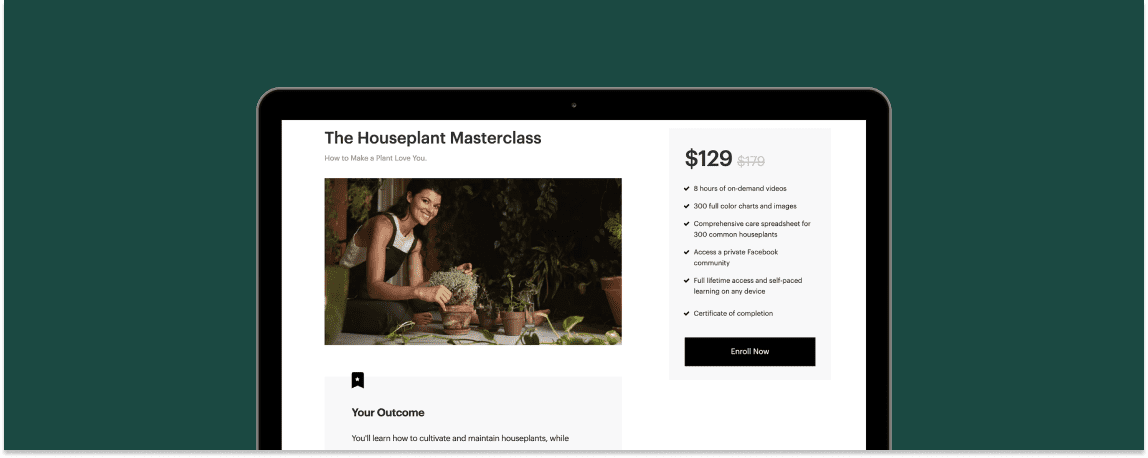
You don’t have to have a website to have a course page on Teachable. Teachable can act as your business’s homepage and course directory.
However, if you have your own website, be sure to update the links and information about your course or courses. Each new course you release should have a dedicated page on your website. The dedicated course sales page should include the following:
Think of the dedicated course page as a product description for prospective students. The more information you give them, the greater the likelihood a student will sign up for one of the courses since they’ll feel confident about their purchase.
Alternatively, you can update your existing collective course page if your site has one already. This is essentially a listing page that breaks down all the class offerings you have as a teacher. Be sure to update this each time you launch a new class or change how you price your courses.
Many of your former students will visit the existing course page rather than click on advertisements since they already trust you. Updating the existing course page will make your new class offerings more accessible to new and former students.
Email newsletters are perhaps the best way to market online courses. Getting leads for your newsletters is easy by requiring student emails from every new student who signs up for a class.
If you already have an email list, send out course announcements when you make a new class and invite your students to watch it on your platform. Your marketing newsletters should also include special deals or discounts (more on those below) if applicable.
You can passively promote online courses by adding a link to the new class or your educational platform in your email signature. Your email signature is used for all of your professional correspondence, either between your students or other individuals and organizations.
Having the link to your new class in your email signature gets the word out there that you have a new course ready for viewing. It’s a great way to bring a few extra people to your class without having to do much.
Are you into podcasting? More importantly, are your students? If you answer one or both of those questions “yes,” then you should feel free to announce your new classes on any podcasts you are a part of. It’s a smart, stellar way to market and sell online courses to those interested in your courses.
Whether you host your own podcast show or are a guest on someone else’s, be sure to plug your new class at the end. Most podcast hosts are fairly relaxed about this, as they’re used to product placements or advertisements being a part of their shows.
You can’t go wrong with allowing new students to sample your educational wares without having to pay a penny. To do that, create a free trial for every new course or class you make.
Platforms such as Teachable allow you to do this with a few button presses. But no matter what platform you use, you should make a free trial by:
No matter which trial strategy you employ, you can rest assured it will be quite effective at getting new students to want to get the full course offering once they see the beginning. Just be careful not to make your free trial with too much freedom and flexibility; otherwise, you might find that a few highly productive students complete your class within the free 24-hour period, for example.
{{pricing-component="/blog-shortcodes/blog-cta"}}
Alternatively, you can create a free mini course. This is a great lead magnet, which will help draw new leads to your brand and other courses you offer.
For example, if you make a new course with three sub-classes contained within, you can offer the first one free on your website. This is similar to a free trial, but it doesn’t have the same time limit element and might be a little more effective.
Naturally, any free mini courses you offer should be valuable and accessible from the get-go. The point of mini-courses is to draw students to your larger class offerings. So make sure any mini classes you launch have valuable information while also serving as a taste of what else you can provide.
As an online educator, you’re probably already comfortable getting in front of a video camera. If this is true, consider hosting a webinar for prospective students looking to learn more about your course offerings.
Your webinar can be on your chosen niche or industry, of course. Make sure it provides some interesting information about your current topics and subjects, such as how to sell an online course. The webinar can be a promotional tool if you plug in your new class at the beginning or end of the session.
Of course, you’ll need to promote the webinar regularly to ensure enough people attend. But done right, a webinar can provide lots of marketing benefits. For example, it can improve your authority in your industry if enough people attend and see that you know what you’re talking about.
If you already have more than one class under your belt, it should be a simple affair to add a promotional line about your new class to the end-of-current course offerings. Include a link to your course, too. This way, you can advertise new classes to students already in your educational pipeline.
They might finish a current course, then notice an advertisement or offer for a new class you just released. If they appreciated the current educational offering, they might be well-prepared to make an immediate purchase and jump into your next course on the same day.

You can also attract people to new classes by making them more economically worthwhile, improving sales for your online course offers. For example, you can market online courses by bundling them with old courses.
Say that you just came out with a new class for a subject that relates to your best-selling course of all time. To get people to view the new class, bundle it with the best-selling course and ensure the price is lower than if someone were to buy both courses separately.
While you may not get as many sales from those who have already taken the other course, you might get many more new students who jump at the opportunity to learn from you at a lower-than-average price.
Speaking of low prices, you can always offer discounts and sales for your new classes, especially in the earliest months after launch. Discounts and sales of between 10% and 15% can do wonders for improving your long-term revenue and showing the value of signing up for your course, although this depends on your profit margins.
Don’t forget to offer discounts and sales for special occasions, such as the Black Friday or Cyber Monday sales periods. Other course creators will undoubtedly do this, and you don’t want to be left behind just because you keep your prices rigidly at their original marks.
Have a talent for writing, or do you want to advertise your new course while also improving your brand recognition? In that case, you might consider publishing a book on Amazon. The book doesn’t have to sell tons of copies to get the word out about your new classes and market your educational brand, not to mention boost your product or service search results presence.
Plus, if you make a book about your educational subject, you can always plug that book into any future classes you make. Like modern college professors, you can tell students to buy your book if they want to learn more about your perspective on a topic or get some extra value from your online classes.
Local meet-ups with other online course creators and educators can be beneficial for a few key reasons:
However, this tip is contingent on your area having regular meet-ups you can attend. Look for social media groups about local course creators or digital education conferences and conventions before making this a major part of your online course marketing plans.

Consider partnering with other course creators, especially those in related but not identical subjects: an effective way to promote your online course in 2024. For example, you can team up with a UI design teacher if you primarily teach UX or user experience principles.
Simply include a mention for other creators at the end of your courses or mention those other creators in blog posts. They’ll do the same for you, and, in theory, you’ll create a tide of advertising momentum that lifts all proverbial boats.
Satisfaction guarantees are essentially refunds. While these can cost you if you aren’t careful, they’re still valuable promotional tools since they show that you believe in your online classes enough to offer refunds in the first place.
Generally, it’s a good idea to offer a 30-day money-back guarantee. Then, students who aren’t satisfied with your new class can get a refund within 30 days of making the purchase.
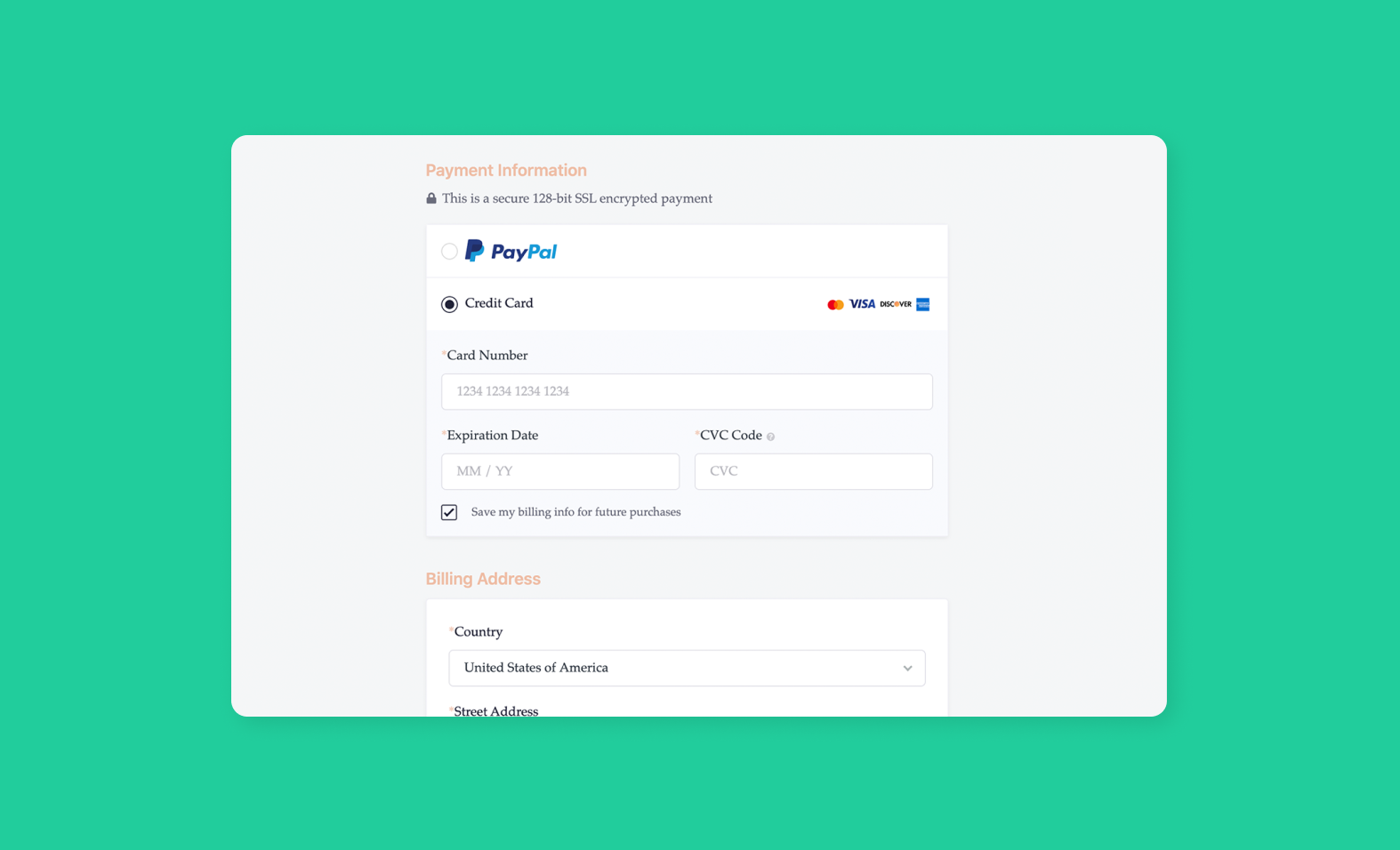
Some students may want to take advantage of your online learning resources, but they may not be able to afford a new class for its upfront price. To help those students out, you can provide a payment plan option by which students make regular monthly installments toward the price of your courses.
This is a great promotional tip if your classes tend to be on the more expensive side due to their length or complexity. That way, even budget-minded students can start learning from your classes quickly after they are released.
You can’t forget about Google Ads—arguably the cornerstone of online advertising these days. Google Ads are super easy to set up and allow you to advertise your classes based on certain keywords.
Google Ads are PPC or pay-per-click advertisements, so you only have to pay Google when someone clicks on one of your ads and sees your class’s landing page. With Google Ads, you can also monitor ongoing marketing campaigns, see which ads perform the best, and adjust your marketing efforts accordingly.
While Google Ads are effective, they aren’t the only online ads you can leverage. You can also purchase banner advertisements on websites related to your niche. For instance, if you teach carpentry online, you might purchase banner ads to show up on carpentry supply websites or even on sites for bigger companies like Home Depot.
If you know bloggers in your social or professional circles, you can ask them to review your classes and courses. Of course, ask them to be honest in their opinions, but have them write positive reviews that will bring new students to your courses.
In exchange, you can link to their blogs or provide them with other value depending on your niche or educational industry.
There are lots of online course forums and networking sites you can join. It’s a good idea to join them ASAP and participate in conversations regularly. This is a great way to build your reputation as a high-quality educator in your field. If any prospective students read your posts, your insights might convince them to give your classes a try.

Affiliate marketing programs have you pay bloggers and other content creators to mention or advertise your courses. If they bring students to your classes, you pay them a commission for each sale you make. It is a great and low-cost way to advertise your classes across the web since you don’t have to pay anything if the affiliate marketers don’t produce results.
Translating new courses into other languages aside from English is a great way to expand them into other markets. The most popular languages include Chinese, French, Russian, and Spanish. However, note that you’ll have to spend a good amount of money to get excellent translation services for your classes.
Google Hangouts allows you to create content like video or slide-based presentations. These are great opportunities to showcase your educational skills or host a “trial” class, such as a module from one of your recently released courses. You can share these presentations with your friends or professional peers and even open them up to the public.

Aside from the above effective marketing tactics, you can and should leverage social media marketing strategies to advertise your courses. Lots of online advertising happens on social media platforms since billions of people collectively use those platforms daily.
For starters, you should make sure each social media profile is updated across the web. Ensure that each profile has your new courses listed clearly with functional links to direct visitors to them.
Next, consider leveraging Facebook ads to bring people who know you on social media to your course content. Facebook ads can be static images or videos, but video ads are much more effective than image-based ads in most cases.
Facebook groups are online social networks you can jump into to promote recently released classes. You should try to join Facebook groups for:
By the same token, LinkedIn groups represent ways to network with others in your field or with students who might be interested in what your classes have to offer. Be sure to join these groups and interact with others in them regularly so you can build a positive reputation and have many opportunities to advertise your classes to prospective students.

Sites such as Fiverr allow you to purchase social media posts from influencers. Often costing just a few dollars each, these can help you spread the announcement of a new online course’s launch far and wide in a few days.
For longer-term advertising purposes, consider working with an influencer directly, who you’ll pay to promote your classes on their social media page.
TikTok isn’t going away anytime soon! If you want to reach younger students, it might be worthwhile to create a TikTok profile, start creating compelling content to promote your business, and build an audience on that platform.
Don’t forget Instagram, arguably the most important social media platform for advertising. Instagram Reels video content, in particular, is excellent for highlighting your classes, showcasing a few small lessons or nuggets of information, and building intrigue about your course offerings.
Marketing online courses means leveraging multiple promotional channels to get the word out about your classes to as many people as possible. With the right preparation and overarching strategies, however, your online classes will draw people to them faster than you think, and your career as an online educator will blossom in no time.
Of course, a platform like Teachable can help you reach your goals effectively as well.
Once you create an online course, it’s easy to get overwhelmed by employing too many tactics to get course sales. That’s why we recommend that course creators start with two or three tactics and focus their energy most on them. In this article, we cover organic search, email, paid, social media, and video marketing strategies.
Social media is one of the easiest ways to reach out and engage people who may have a genuine interest in your product. You can drive traffic to course platforms via Pinterest, Instagram, Facebook, Twitter, YouTube, and more. Many social media platforms offer business profiles that support your marketing efforts.

If you want to know how to get paid for Reels on Instagram and Facebook, you’ve come to the right place. With the launch of the new Facebook Reels program and the continued success of Instagram Reels, lots of content creators and aspiring entrepreneurs are looking to boost their income.
Although Instagram and Facebook both fall under the Meta family utilizing the Reels on each platform involves a slightly different process. Let’s break down how to get paid on Instagram and Facebook for Reels.

{{socialmedia-component="/blog-shortcodes/blog-popup"}}
Instagram Reels are the most popular short-form video content on Instagram. Reels are intended to compete with the short-length videos made popular by TikTok. They offer entertainment or education and can act as advertising and influencing opportunities for content creators and consumers alike.
Instagram Reels are generally less than a minute long. They can also be modified and improved through the addition of post-production effects, music, advertisements, and more.
Unfortunately, the primary way to get paid for Reels on Instagram was the now-defunct Instagram Reels Play Bonus program. Meta ended the program in March 2023 and is letting existing deals expire. This is due to shifting priorities and, most likely, the launch of the Facebook Reels program mentioned below.
However, that’s not to say the bonus program will never be launched again in the future. It could come back after Meta becomes more comfortable with content creators and payment rules on the platform. But Meta may also decide not to restart the program, as Instagram’s value could be elsewhere in the eyes of the parent company.
The Instagram Reels Play Bonus program was a novel way to allow content creators to earn money based on how many views their Reels content got in a short timeframe. The Play Bonus program came on the heels of a new Instagram commitment to invest $1 billion in creators.
Creators were required to set up a Play Bonus account, similar to setting up other creator tools. Once tat step was complete, creators would receive a payout for all successful Reels content at the end of 30 days. Creators were also allowed to choose up to 150 distinct Reels videos to count toward their payment bonuses. They could pick and choose the best-performing Reels to maximize their bonuses.
Unlike the Facebook Reels monetization requirements, the Instagram Reels monetization requirements were a little more relaxed. Creators could choose any number of Reels videos to count toward their Play Bonus earnings over a 30-day timeframe.
The bonus was then determined by the performance of the Reels video content and the number of views the creator earned on the Instagram app. Generally, the higher the view count and the more successful a Reels video was, the more money the creator earned through the program.
Many creators reported a different targeted number of plays and payout amounts. As an example, some creators saw a maximum bonus of up to $8,500, but they had to hit well over 9 million plays to achieve that bonus.
Because of this, the Instagram Reels Play Bonus program was–in some cases–not as desirable as other ways to earn money on Instagram. It was truly a “bonus” and not a means for influencers to replace their other sources of income on the platform.

Before its shutdown, the Reels Play Bonus program had a variety of eligibility requirements. For starters, it was invite only. This is likely to continue should the program come back to Instagram. Furthermore, it was originally exclusive to content creators in the United States.
Furthermore, eligible creators also had to:
Content creators who met all of these qualifications would have been able to earn money from Instagram Reels.
So, if you’re wondering how to get paid for Reels on Instagram, sit tight. For now, the platform is undergoing some significant changes, and Instagram may reinstate the Reels program or come up with something completely different. Time will tell.
In addition, you can continue to make money on the Instagram platform through traditional partnerships and social media marketing opportunities. As an example, you can practice your influencing skills by building up an audience and partnering with different brands. Then you can advertise those products and services through your Instagram video and photo content.

Facebook Reels are, put simply, short-form video content meant to compete with the short videos on TikTok. Just like on TikTok, Facebook Reels allow businesses and users to enhance their video footage with special effects, music, and other post-production elements. It’s incredibly similar to the Instagram Reels we explained above.
Every business should already have a Facebook business page. Having a Facebook account for your business can yield numerous benefits in terms of sales, online presence, and brand awareness. But Reels are one way for businesses to take their Facebook presence to the next level.
The goal of Facebook Reels is to provide engaging, short video content that’s easy to consume. Naturally, many businesses have now started to use Facebook Reels for marketing purposes, and influencers also create a lot of Facebook Reels content.
Facebook Reels can be between three seconds and sixty seconds long. Content creators have leveraged this new type of video content to pursue advertising opportunities and to make money.
The primary way to get paid for Reels on Facebook is to become a content creator and embed ads in your videos. Once you do this, you can earn money through advertising the products and services of other companies.
Once you start earning money through Reels ads on Facebook, your profits will be split 55% to you and 45% of Facebook. This is an important change because prior to Facebook’s new policy, you could only include advertisements on longer Facebook videos.
To use Facebook Reels advertisements, you can put the ads on the top of your Reels content. Or you can use banner ads, which are semi-transparent overlays located at the bottom of each Reel. Lastly, you can put advertisements via “stickers,” placeable anywhere on the Reel.
To monetize your Facebook Reels video content with advertisements, you have to meet certain requirements. You have to be a content creator and:
Once you meet all of those qualifications, you’ll be able to make money on Facebook Reels. You can check your eligibility by navigating to “Creator Studio” or “Meta Business Suite” and then clicking “Monetization.” There you’ll see the word “Status” and the option to “View Page Eligibility.”
Thanks to the success of Facebook Reels so far, Meta also introduced the Reels Play bonus program. In a nutshell, this bonus program provides a monetary bonus to anyone who has a Reel that gets at least 1000 views over 30 days.
As a content creator, you can earn up to $35,000 per month if your Facebook Reels are successful. Note, however, that the bonus program is invite-only. Generally, it’s only extended to influencers or known advertisers and content creators who bring a lot of value to the Facebook platform for marketing potential.
While the above Reels eligibility guidelines are important, they only apply to certain countries. Currently, you can only make money from Facebook Reels advertisements in the U.S., Canada, and about 50 other nations.
However, Facebook Reels’ bonus program isn’t the only way to monetize this type of content. Indeed, many other strategies exist to help creators to earn money for sponsored content.
For example, on the Facebook and Instagram apps, you can create sponsored content by partnering with different brands and advertising products and services to your social media followers. This is the go-to earning strategy for influencers and online marketers of all kinds.
However, keep in mind that this monetization strategy only becomes truly successful if you work hard at it and build a following over time. For now, it might be a good idea to use the Facebook Reels bonus program to build up that audience by creating savvy, entertaining short-form video content.

As you can see, there are many ways in which to get paid for Reels on Instagram and Facebook. Savvy content creators will use these methods to bolster their income as a creator and maximize their influencing success.
Instagram Reels previously allowed you to get paid through the Play Bonus Program. This payout occurred once creators signed up for the program, then added up to 150 Reels videos to count toward the bonus. Bonus amounts were determined based on the number of plays, the number of Reels videos, and other factors.
The Facebook Reels program doesn’t have a strict pay-per-view amount for every creator. Instead, you can only estimate how much money you’ll make per view based on averages.
For example, if you earn about $154 and have 37,513 views on your Facebook Reels video content, you can estimate you have earned about $4.11 per 1,000 views. That comes out to just fractions of a cent per view, so you’ll need to create a lot of Facebook Reels content and have it be successful for you to make anything approaching a significant profit.
Facebook Reels generally pays a few dollars per 1000 views if your Reels video content is successful. To make a significant profit, you’ll need to get many thousands or millions of views, particularly if your Reels content is the only income stream you have to count on.
The Instagram Reels bonus program was invite-only. Generally, Instagram invited individuals based on their influencer profiles, the content, and their profit potential. The Instagram Reels bonus program was discontinued in March 2023. If it starts up again, there will likely be new invitations or eligibility requirements to consider.
Before it was discontinued, the Instagram Reels Play Bonus program required creators to have fewer than 1 million followers. The logic being that creators with more than 1 million followers didn’t need the extra income from the Play Bonus program.
However, again, the Reels Play Bonus program has been discontinued. If it starts up again or Instagram replaces it with a different type of bonus program, the follower requirement could be very different.