Thank you! Your submission has been received!
Oops! Something went wrong while submitting the form.
MENU

A closer look at the educators, programs, and communities that got their start right here on the platform.
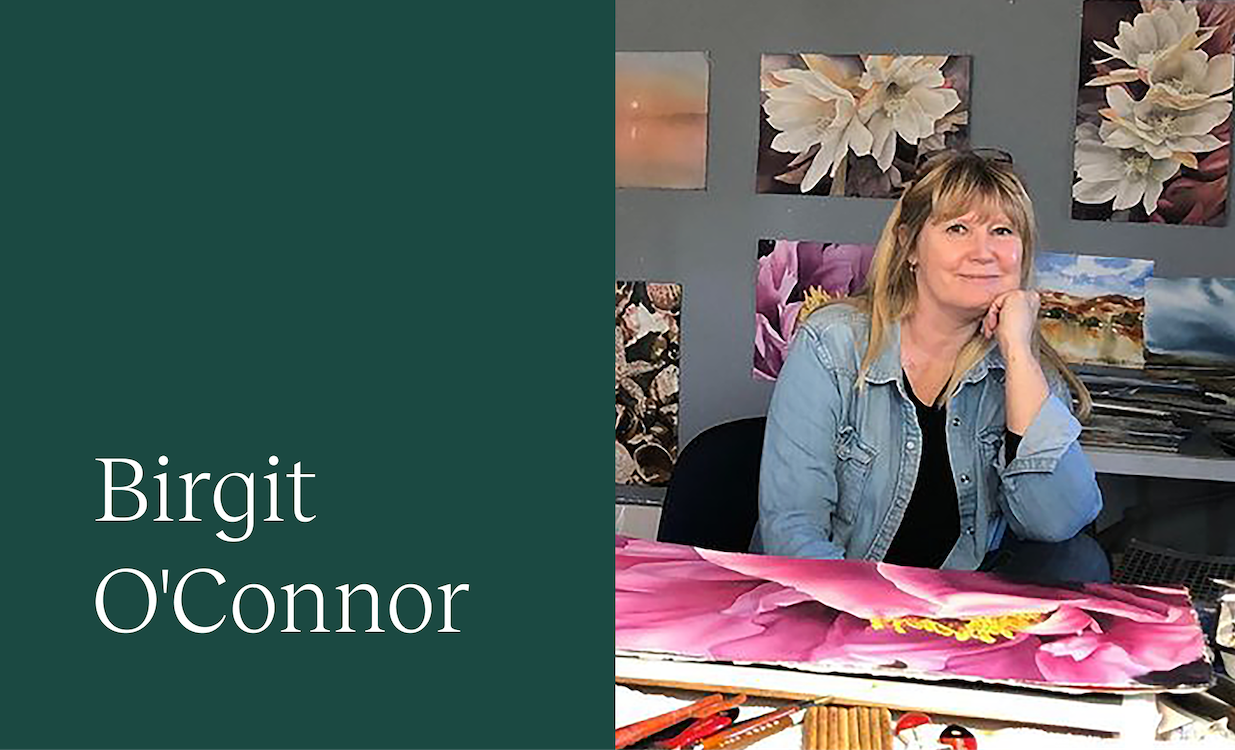
The space where a creator works can be one of the most personal spaces they have at their disposal. Whether you create from home or you have a studio somewhere else, where you create has a direct impact on what you create. Our column “Where I create” will take you where Teachable creators do their most important work. We’ll feature a new creator’s space each month to inspire others.
Becoming an online creator isn’t an overnight process. For Birgit O’Connor, it was one many years in the making. The watercolor artist, author, online course creator, and instructor started teaching painting courses in person in 2000. She now runs multiple six-week courses on Teachable at a time. Helping others learn the joys and challenges of watercolor painting.
“It’s pretty wonderful to do what you love and I love my studio,” said Birgit. Her studio is in a coastal California town a few miles north of San Francisco. She has tailored it to perfectly fit her needs for painting, and for teaching.
For teaching, she has two webcams set up. One for when she’s just talking to students but not demonstrating and another to film her painting from an aerial view. So her students can see her painting and get a good, well-lit view. Her studio is full of beautiful paintings she’s worked on. Of course, she’s got plenty of supplies too: paint, brushes, canvases, paper, and easels.
But in a broader sense, her studio is anywhere she’s painting. If she’s working on a landscape piece, her studio could be the beach that day. For florals, it might be a field of wildflowers. She can go where the art takes her to create.
With a family history in the arts, Birgit didn’t find it difficult to pick up a paintbrush. Her mother was a photographer, her father a lithographer, her uncle was a gold-medal watercolorist, and her aunt was a graphic designer. She grew up surrounded by people working in the arts.
“My mom would always talk about art and how much she admired my uncle. So that inspired me, because I was never great in school. And so I think, I just have a different way of looking at things, right? The artistic mind,” Birgit told Teachable.
After having her first son, she really started exploring art at home. But she was having a hard time figuring out how to layer her colors well and to make the connection between her brush and the image she had in mind.
So she ended up going to a one-day workshop on color charts, which helped her get her colors right. Then she upgraded the materials she was working with. “That’s the beginning of how I understood how to be a student,” she said of her experience teaching herself and understanding what works for her.
Of all things, a parking ticket ended up being the thing that prompted her to make her first sales. She had gotten a ticket, and her husband suggested she try selling some of her paintings to pay off the ticket. “And I thought, ‘No, that’s a terrible idea.’ And I thought I’m gonna go ahead and fight this ticket,” Birgit explained.
“I thought the idea of going in front of the judge or showing my work, both felt absolutely horrible because I was so insecure,” she said. But she ended up going into a local cafe and asking if they would consider displaying her paintings and offering them for sale. Every single one sold. “So art has been an incredible journey of removing insecurities,” said Birgit.
After making her first sales, she started expanding her horizons from landscapes to florals and beyond. She started entering art shows, and soon her art made its way to galleries and shows in other states and countries.
She later started making instructional DVDs and writing books on painting too. For a time she would travel and teach painting as well. But it took three or four weeks at a time.
However, once Birgit went online and started teaching from home, she had all her materials at her disposal, she said. “The wonderful thing about Teachable is that it gives me so much flexibility,” she added.
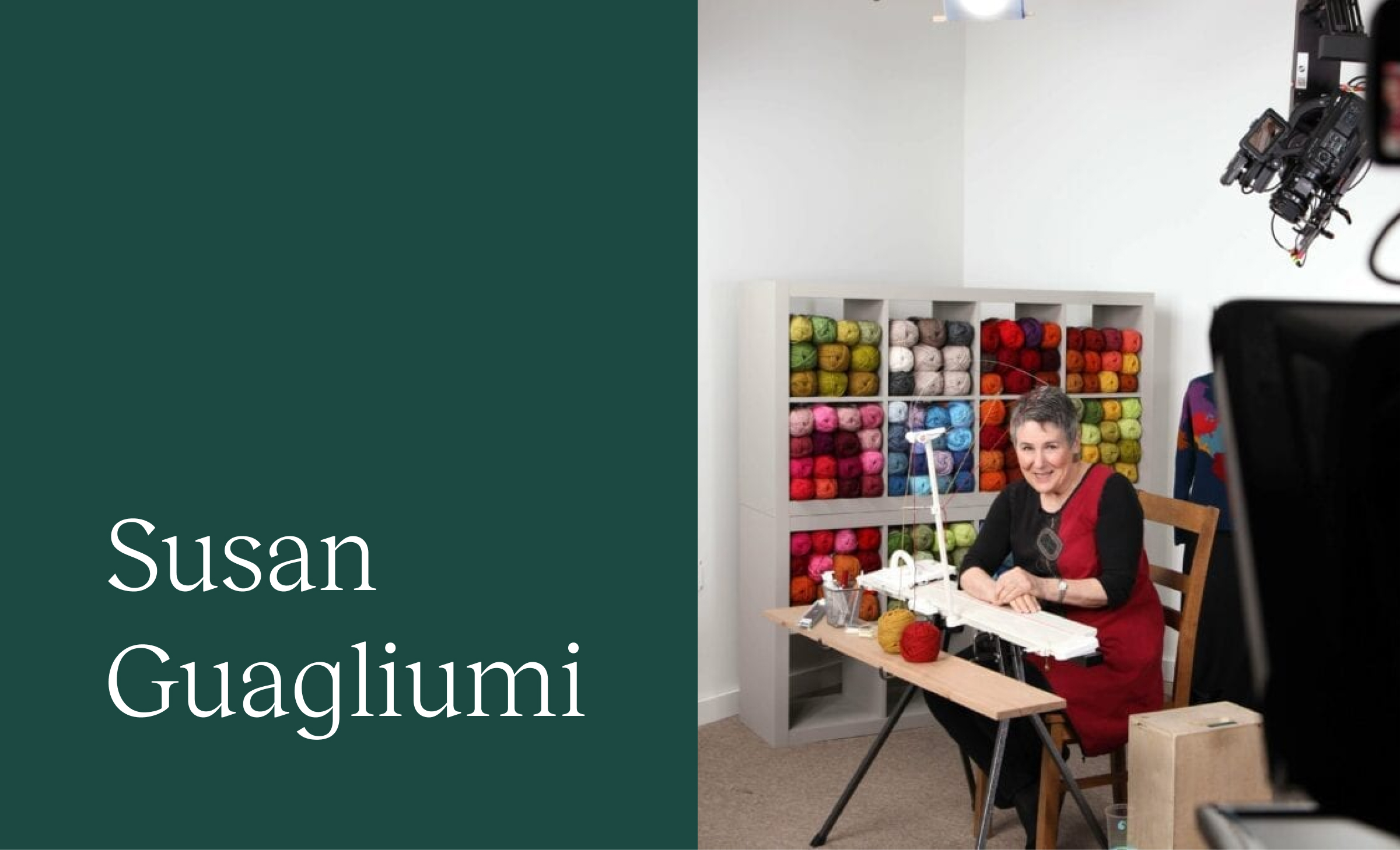
The space where a creator works can be one of the most personal spaces they have at their disposal. Whether you create from home or you have a studio somewhere else, where you create has a direct impact on what you create. Our column “Where I create” will take you where Teachable creators do their most important work. We’ll feature a new creator’s space each month to inspire others.
Susan Guagliumi is a machine knitting expert, she’s been using them and teaching others for decades. She’s also a Teachable creator with a beautiful studio workspace. Take a look at her cozy studio full of all the tools she needs for a productive day of creativity and educating others.
Susan works from her in-home studio in a small town outside of New Haven, Connecticut. Her studio features exposed beams, a few knitting machines, a large window offering lots of light, and some momentos dotted around the space.
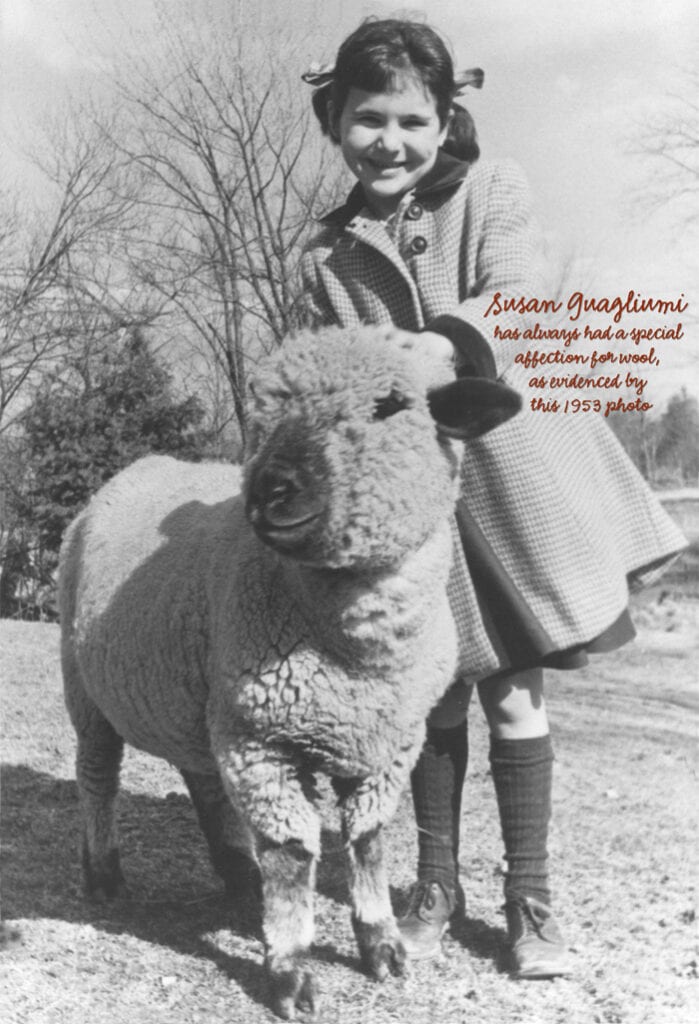
While giving a virtual tour of her space, she pointed out a photo on a wall behind her.
“That’s a picture that an uncle took of me when I was about five,” she said. “Talk about prophecy. I mean, there I am with a big wooly sheep. He must have known.”
Susan’s been using knitting machines and teaching others how to use them for decades. She’s also been perfecting her craft and earning her expert status over the years. She’s worked for several knitting machine companies and was even the Education Director for Studio by White Knitting Machines.

Her experience filming educational video content for knitting machine manufacturers helped her hone the art of teaching. Prior to the COVID-19 pandemic, she was teaching students in person at the Fashion Institute of Technology in New York City. She’s also written several books on machine knitting which helped her jumpstart her content for her online courses.
When in-person learning was suspended, online courses with Teachable gave her the opportunity to continue teaching. With Teachable, she’s able to share her passion for machine knitting with others through six courses that make up her school. And she can do it all while working from home. “The flexibility that you get from working at home is just—you can’t compare it to anything else,” she said.
While she loves that she no longer has to set her alarm for 4:30 a.m. to get on a train to Manhattan, she loves the flexibility of working from home when the creative inspiration hits even more. “The thing that I really love is that I can work when I feel like working. So if it means that I’m still writing at 11 o’clock at night, then so be it,” she said.
Even with her experience creating educational video content, Susan had a bit of a learning curve to tackle when it came to recording content for her first courses. “I’m finding that in order to do what I need to do with the knitting machine, that ideally, a three-camera shoot is what I need,” she said.
She ended up with three separate videos that need to be consolidated and synced, work she was able to contract out. But she did take on learning to edit video herself, and she ended up really enjoying it too. “I do pretty well with it and the editing that gets to be sort of cut and paste,” she said.
“That was fun. And I loved it,” she added. “You could just get lost in that with a glass of wine and a sandwich and spend all day at the computer.” For this work, having two monitors was important for her editing and creating her course.
The key items every creator needs in their space will obviously differ depending on the creator, the courses they teach, and whether they need any materials for their craft. For Susan, her necessities include lots of fabric, and of course yarn, in addition to the various machines she uses to knit and create.
“I have two machines on the floor here in the studio. I’ve got a sewing machine and a serger. I’m trying to make friends with a cover stitch machine. We have our days, sometimes it works, sometimes the hiccups are a little unpreventable. And a good iron—an iron is critical for me,” she said. Her electric yarn ball winder is also a tool she uses on a regular basis, though after years of reliable service, it’s on the fritz and might need replacing.
Other than those machines, her studio features some decor that holds sentimental value and offers inspiration. “There is a collection of Matryoshka dolls that have absolutely nothing whatsoever to do with knitting or sewing or anything else. But they started showing up probably 40 years ago and for birthdays and whatever family has sent them as gifts,” she said.
She’s also got valentines from over the years on her walls from her husband, an artist himself. “My husband and I have been making valentines for each other for years. And he’s an assemblage artist. So his are all three-dimensional boxes,” she explained.
While Susan’s space is clearly full of the items she needs to create and to teach, it’s got the personal touches that reflect who she is beyond her Teachable courses and her knitting career. The room reflects who she is as a creator with the inspiration of her past and present featured.
For a peek into Susan’s studio, head over to our Instagram post featuring her!
Do you want to share your workspace? Reach out to nina@teachable.com

The space where a creator works can be one of the most personal spaces they have at their disposal. Whether you create from home or you have a studio somewhere else, where you create has a direct impact on what you create. Our column “Where I create” will take you where Teachable creators do their most important work. We’ll feature a new creator’s space each month to inspire others.
Sitting down to write can be a daunting task. But when you’ve written more than 400 short stories, like Nila Patel has, it becomes less intimidating. Nila is a writer and has a school on Teachable to help others succeed with their writing as well. We caught up with her to learn about the workspace she’s found works best for her.
“I’ve always wanted to write. When I was very young, I thought I wanted to be a novelist,” Nila told Teachable. “But fast forward to 2013, I started a website where I was posting, and I’m still posting, short stories every week,” she said. Now she also has a podcast where she discusses her weekly writing too.
Nila is in her ninth year of writing and posting a short story each week on her site. “I’m in a very, I think, unique position,” said Nila. That unique position? She had a proven track record that she can get it done, so she can help others get their writing done, too. After all, she’s done it hundreds of times.
“I had a day job up until last year. I quit my day job, but I have always wanted to work for myself and have my own business, but I wasn’t sure how to do that,” she said. Teachable gave her the means to do so. She took advantage of the various challenges and summits Teachable hosted to get started on her journey. The Launch Accelerator Challenge was the thing that really helped her get her course started. “It was the right time,” she said. She made one sale during her pre-sale prompting her to finish her course. Next up is the work to promote her course and increase those sales numbers.
Her course is set up to help aspiring fiction writers write a short story in just five weeks. She covers everything from the brainstorming and outlining phases all the way through the final draft of the story. She also covers the common challenges of writing. Like how to overcome writer’s block and decide on the direction a story should take. In her course, she also shares some of the tactics that help her most too, like asking “What if?” and “Why?” of her own story. This helps her see where her story is and decide whether she wants to continue with the story that way or change it up.
Unlike many of the subjects of “Where I create,” Nila doesn’t have a hyper-specific setting that she needs for her writing. What she needs more to be creative is a place that delivers a feeling more so than a specific space. She doesn’t need a large desk or screen like some creators do. “I don’t like to be anchored,” she said.
“Sometimes I even rotate between my laptop, and I even have a couple of tablets, which sometimes just makes it feel more [like a] casual environment,” she said. “I also don’t like any kind of sound or music or anything. And I think that’s because it could clash with whatever I’m writing,” Nila said. If she does want some background sound, she goes for white noise, such as rain. She even keeps some bluetooth keyboards around the house so she can easily grab a tablet and keyboard whenever the inspiration to write strikes. A casual environment with plent of writing tools helps the creativity flow for Nila.
Even within her course she explains to students how sitting down at a big desk and screen can be daunting and actually make it harder to get writing. The freedom to move around, get comfortable, change settings, and adjust when necessary is important to getting down to it and writing.
“Sometimes I’ll have a mug of tea or something next to me just to make myself comfortable. So that’s what that means for me,” Ultimately, to Nila it’s the comfort and feeling of an environment that makes where she creates special.
{{threesteps-component="/blog-shortcodes/blog-popup"}}

The space where a creator works can be one of the most personal spaces they have at their disposal. Whether you create from home or you have a studio somewhere else, where you create has a direct impact on what you create. Our column “Where I create” will take you where Teachable creators do their most important work. We’ll feature a new creator’s space each month to inspire others.
On any given day Gwenydd Jones, the creator of the Teachable school The Translator’s Studio, could be anywhere in the world. When we spoke with her, she happened to be in the Swiss Alps. She and her husband are digital nomads, making their way around the globe while running their business online.
They’re in the process of building a new house in Spain, but while waiting for it to be done, they needed a place to stay. “We were like, well we could just rent an apartment here in Seville. Or we can become house sitters and go travel around and see where we land. And so that is how I come to be here today,” Gwenydd said.
Gwenydd and her husband run The Translator’s Studio on Teachable, a school that helps students learn to become translators and pass the professional exams required. Their courses can help students who are just starting out all the way to those becoming professional translators.
Gwenydd has been a translator since 2009 when she passed the DipTrans exams she now teaches others to pass. “I did two master’s degrees in translation, one in translation and one in legal translation, and I sat the exam, the DipTrans, and I failed it,” she said. “And then I came back and passed it. And that’s kind of what inspired me to start writing these courses because I thought that I could offer more vocational-focused training or practical training for translators,” Gweyndd said.
She released her first course in 2014 as a large PDF file. And she was initially just sending it out as a large zip file. Which she admits, wasn’t the most professional or sustainable way to run her business. Luckily, she later found Teachable.
As Gwenydd’s online business grew she decided to invest in some business mentoring. Which led her to make the decision to invest in an education platform to help her share her courses better. “I’m very glad I did, I did it actually before just before the pandemic,” she said. “I was well set up and was able to sell quite a lot of courses during that time because people suddenly found themselves with time and looking for online courses,” she said.
And the success hasn’t stopped there. She said her business has continued to grow along with Teachable over the last three years. Which in turn allows her and her husband to live their lives as digital nomads.
Due to the fact that she’s always on the go and changing locations, Gwenydd doesn’t have one home office. Her office is whatever home she happens to be in that day. Sometimes that means she has a view of mountains, other times, it’s a view of the beach or a city street. And sometimes she has co-workers in the form of pets that belong to the owner of the home she’s house-sitting.
What she does take with her to every location? Her rituals. “I can’t take my space with me, so it’s really important to me that I follow rituals,” she said. It’s important for her to write every day, so she structures her day so that she can wake up, write, and then have breakfast. Then she prioritizes whatever else she’s focusing on that day. “By thinking like that, I’m able to focus on the work I want to get done and not get distracted by things like gorgeous cats (she’s pet sitting,) and just being in a nice new city,” she said.
But there are some technical items that help her get settled in too. She’s narrowed them down to the minimum of what she needs in order to travel light. She brings her laptop, a stand for it, and a mouse that she can pack up. But one thing sets the tone and makes whatever space she’s in feel like her office: a coaster.
“As long as I’ve kind of got this ritual in place, then I’m able to sit and focus. And I have this little coaster that always goes in my suitcase. And so I lay out my computer, and I put my coaster down so I can put my cup of tea there. And then I’m like, ‘Okay, yeah, it’s just a coaster but it creates my working space,'” she said.
Do you want to share your workspace? Reach out to nina@teachable.com

In celebration of Creator Month 2023, we’ve hosted a series of five live events on YouTube with real Teachable creators. These fireside-chat-style events provided a deep dive into what it means to create impact on your students and customers. We’ve tapped creators of every size and industry to share their stories in our special event series, Creator Month 2023: Creating Impact.
We chatted with Shauna Thoresen, a seasoned Social Media and Lead Generation strategist, who established Social Waves Media in 2017. Her mission is to guide clients in generating ideal leads, streamlining the customer journey, and boosting conversion rates. She excels at simplifying complex strategies into actionable, easy-to-follow steps.
Her expertise lies in empowering Insurance Agents to autonomously generate their own exclusive leads via Meta platforms (Facebook and Instagram) Advertising. Her easy-to-follow course, “Insurance Click To Close,” equips agents with the skills to achieve self-sufficiency in generating exclusive leads, complete with self-scheduled appointments.

Mary Van Geffen discuss how she built a business around helping fellow mothers in a recording of our live event. Watch it now.
The below video is a recording of our live chat with Mary Van Geffen, international parenting coach for moms of Spicy Ones, her signature 8-week group program designed to help moms gain the confidence to choose gentle, respectful parenting especially if they weren’t raised that way.
Mary helps people who are highly competent in life but overwhelmed by motherhood to lean into the spiritual discipline of staying calm and cultivating warmth and tenderness all while trying to wrangle fiery future CEOs. See how she does this with serious skill-building and self-compassion in our interview.

In celebration of Creator Month 2023, we’ve hosted a series of live events on YouTube with real Teachable creators. These fireside-chat-style events provided a deep dive into what it means to create impact on your students and customers. We’ve tapped creators of every size and industry to share their stories in our special event series, Creator Month 2023: Creating Impact.
Check out our live chat with Ashley Turner. Ashley and her family moved to a few acres of land on the coast of Nova Scotia in 2017 with an interest of being self sustainable. Today, Ashley and her family now operate on over 300 acres of vast wood and pasture land, with a growing operation of premium cattle. (Learn more about Turner Farm here!) And, during the pandemic Ash started teaching live sourdough classes to a worldwide audience.
Want more stories like this? Be sure to watch our conversations Mary Van Geffen, Shauna Thoresen, and David A Smith MBE on our YouTube.
{{coursecurriculum-component="/blog-shortcodes/blog-popup"}}

The following is a guest video from Teachable creator, Darnell Brown. Darnell is an award-winning certified brand strategist and educator. He helps today’s leaders and experts save time and impact lives through brand clarity, empathy, and strategy. His clients include BAND-AID, Passport Parking, & /dev/color. In honor of Teachable’s Creator Month, in which we celebrate and share the expertise of creators everywhere, Darnell shares his a tip all entrepreneurs need: how to sell without the sleaze.
Hey there! Darnell here with Bulletproof Hustle, certified brand strategist, educator, and consultant. So today, I’m going to show you how to sell without feeling sleazy or slimy—like we’ve all experienced before. Y’all know what I’m talking about, too, because you’ve probably been on the receiving end of a terrible sell—one that made you feel like they were trying to force you into buying something that you really didn’t want, right?
So the first point is that we have to realize how much we already sell. It’s inherent. It’s in our DNA. It’s in our nature to sell. Because anytime somebody has commented that you got a fly jacket or some dope kicks, and you were like: Hey, I got this from from this store, or this jacket has this buy one, get one free right now—you better go check that out.
You’re selling that brand. You’re selling that store. That’s word of mouth! Anytime somebody has come to you, and they’re like: You know, where would you recommend that I go get this service? And you’ve mentioned a place—you’re selling that service for them. Anytime that you’re trying to get your kids or your spouse to clean their rooms or get better grades for your kids. That is, you’re selling them on an idea. You’re trying to convince them to do something.
So we are already doing this day in and day out several times a day—pretty much anytime that we’re having a conversation. Me talking to you now is me trying to persuade you about what sales is. See what I’m saying? And so, anytime there’s an exchange of ideas, or you’re trying to get someone to buy into what you’re selling—like your opinion, or your idea, your viewpoint—that’s sales.
So that’s the first part: already realizing that you’re doing it, and how comfortable that you are. You didn’t even realize it!
The second point is that sales really is a game of persuasion and convincing someone to take an action. When your motives are altruistic or you’re trying to get someone to do something that’s going to be good for them, that is the most optimal version of persuasion—using it as a force for good.
Sales really is persuasion. It’s really about getting someone to take an action that they otherwise wouldn’t have took, but it’s going to benefit them. And it’s probably it could benefit them immediately or in the long run. But either way, this is something that they might not even know that they need or want, but when they get it, they might not ever be able to live without it again.
In persuading people and shifting away from sales—the art of persuasion, the back and forth—then you’re looking at any compensation or any reviews or testimonials that you get as a reward, right. If someone pays you for what you’ve done to persuade them to take an action, then that’s more of a transaction at that point. That’s dealing within the world of commerce a little bit more, right. But anytime there’s an exchange to some degree, then that’s when it becomes a more transactional thing. When it’s just you persuading someone to take an action, that’s when it is more about sales.
And then finally, that third point is that you have to get comfortable with being intentional about selling since you’re already doing it for other brands all the time. All brands that you like and love—anytime that you’ve recommended or referred someone, you’ve done some selling. When it comes to you as an entrepreneur or business owner, and you feel like you’re not the sales-y type or you’re not a natural salesperson, you got to get away from that thinking.
The way to get away from that thinking, the secret to it, is to look at it as though you’re doing your audience a disservice by not giving them something that they need. You’re hoarding it inadvertently. You’re trying to perfect something that will never be perfect. It’s progress over perfection. But, your intended audience could be using that thing! It could be improving their lives.
The more you hoard it or get shy about it or don’t feel comfortable in your own skin, someone else is selling them an inferior product. Someone else is selling them in inferior service—probably putting so much more dirt on the game in your industry.
So the sooner that you get out there with this unbelievable thing that you have, and the sooner that you get comfortable with pitching it, the better off we’ll all be because we might need and want that thing and not quite be able to realize it or articulate it perfectly just yet. But we’ll know it when we see it! And we will realize, ‘OK, that person is thorough. They’re real. I’m happy to buy from them.’
The last thing I’ll say is a simple example that we probably all can relate to is many of us don’t like getting on camera. Or we don’t like being in webinars and presenting ourselves. So if we are on a webinar, and we were invited there to pitch a free thing or help someone solve a problem, when it gets to that inevitable conclusion, and it’s time for an upsell, we feel a way about that. We don’t feel like that’s natural to us.
This is the perfect circumstance where you want to get out of that thinking and say:
‘OK, well, I’m doing them a disservice. I couldn’t share everything that I know in this webinar in the first place. There’s more to this story. There’s more to this journey. There’s more education to be had. So if I hold on to this, that student and these people are going to go elsewhere. And they’re probably going to get a lesser thing. It’s my duty at that point to keep this journey going on—to continue with where we are, where we can leave enough because it’s impossible to fit it all into this one thing at this time.’
You got to break stuff down, so look at it in that way. Those are the three big points! Just to recap, just to tie this whole thing together, y’all. Number one: We already sell all the time anyway. We do it day in and day out—anytime you’re having a conversation virtually.
Number two: Sales really is persuading. At least when we’re good and our intentions are solid, we’re really just persuading people! We’re getting someone to take an action. We’re trying to convince them and give them that extra nudge that they need to get them over that hurdle. And then finally: We have to get comfortable with it, because we’re doing a disservice to our audience every time that we hold on to it, and it could be out there into the world.
That’s what I want to leave you with today as you go on into your journey. And that’s how you sell without feeling sleazy. Thanks for watching.
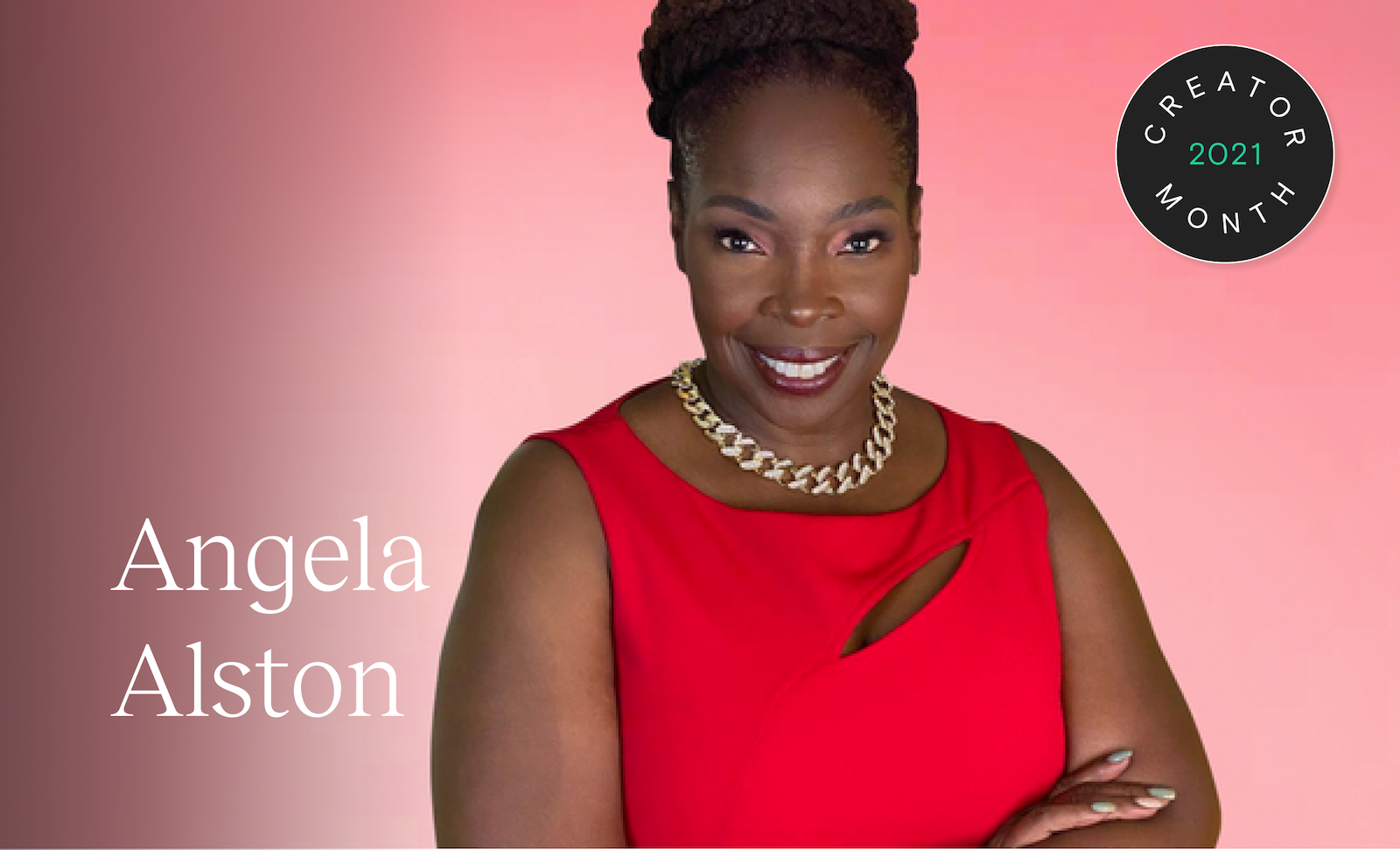
The following is a video from Teachable creator and entrepreneur, Angela Alston. Angela is the therapist and owner of A Journey To Wholeness, LLC. As someone who has been in the human services field for over 30 years, Angela has worked with a variety of clientele from developmentally disabled clients, clients on methadone maintenance, teenagers in a group home setting, adolescents in juvenile detention, and more. Her content has been featured at 2020 and 2021 The Teachable Summit and featured in several podcasts. In honor of Teachable’s Creator Month, in which we celebrate and share the expertise of creators everywhere, Angela shares her journey and the past that lead her to create and teach.
Hey, hey, hey, you know who it is Angela Alston of A Journey to Wholeness LLC. I’m here today just to give you a little bit of backstory about who I am.
I was born in Birmingham, Alabama. I was raised by a single mother—me and my two siblings. And we were raised in the projects in Birmingham, where we experienced a lot of environmental traumas. Many of my friends died very young, due to gun violence or alcohol [or] drug abuse—things like that.
Every one of us grew up the same way: None of us had a father. So we didn’t have the foundation to understand what relationships were—to understand what true love was. And as a result, I ended up in a variety of abusive relationships. I’ve experienced sexual trauma, mental health, physical trauma, so many different things. And, how I got out of it was by the grace of God, and that’s what I choose to believe.
Because at that time, we couldn’t talk to therapists. We couldn’t talk to our teachers in school. We were told what happens in this house—you figured it out—stays in this house, right? So with that being said, I kept a lot of my trauma inside. And as a result, I add suicidal ideations. I attempted suicide twice, and I thank God, to this day, then I didn’t accomplish it. But I just thought the world would be better without me. I hated myself. I hated my features. I hated the family that I was born into.
With everything that we have experienced is so much dysfunction in my family, my mother only had an eighth grade education. So she could only do what she could do, right? She could work with only what she had. And with that being said, I experienced a lot of the effects of that lack of knowledge.
And when I moved to Connecticut, I decided that living on my own was expensive. (Hello, especially living in Connecticut!) I realized I had to go to college. That was the only way I knew at the time. So then I decided to go to college. And I have four degrees and three in which I use today.
But with that being said, I decided to do more. I wanted to help more. Working in the prison system for the past ten years, I began to see the pain. And it was so familiar because I’ve experienced [it] myself. I know what it is to live in a psychological prison, and I walk around smiling like I’m OK—and I was never OK. So once I decided that, I was no longer happy working in the prison, because I felt like those guys leave with a lot more, but they couldn’t get it. So I decided to branch out and to leave my state job with great benefits, alright, and to work in my practice full time.
So that’s what I do now. I’ve worked with many ex offenders on a commission for scrip program—and that’s a reentry program working with ex offenders. And they are not my only population that I work with, but I have a special place in my heart for them.
I also have a special place in my heart for entrepreneurs and high earners. Because I understand mental health is a thing, right? And we can be very successful. But if we don’t take care of our mental health, eventually, things are going to crumble.
So although I came from that background, through all those traumatic experiences I had, I just knew I had to use my God given gift to help others. And that’s why I’m here. I’m so grateful for Teachable’s platform that would allow creators like me to come forth and to bring my creations to the world. And hopefully that someone may decide that they want to care for themselves on a deeper level.
Someone may decide, “Hey, if she could do it and if she came from poverty, and she came from trauma, then I can too.” My goal is to continue for the rest of my days—I’m 51, ok, 51 years young—but I’m planning to do this as long as I can, and I’m hoping that I’ll have more content to bring to you through the Teachable platform. Thank you very much for listening. Have an amazing day.