Thank you! Your submission has been received!
Oops! Something went wrong while submitting the form.
MENU

Guidance on how to price your courses, structure offers, and build a business that generates consistent income.
%2520(1).png)
You launched your course to teach what you know. Somewhere between recording lessons and writing sales copy, you probably gave zero thought to international tax law. Fair enough. Most creators don't, until a student in Berlin triggers an EU VAT obligation or a purchase from Austin adds Texas sales tax to the equation.
Selling digital products across borders creates a tax situation that grows more tangled with every new student in a new jurisdiction. Different states charge different rates. Different countries enforce different rules. Some tax digital courses outright; others exempt certain categories. The compliance landscape shifts constantly, and staying current takes time most creators would rather spend building their next product.
Here's the good news: if you're on teachable:pay, most of this is already taken care of.
The specifics depend on where your students are located, so let's break it down by region.
Teachable calculates, collects, and remits sales tax in every applicable U.S. state under marketplace facilitator laws. These laws require platforms like Teachable to handle sales tax collection on behalf of their creators. If you're on teachable:pay, you don't file state sales tax on Teachable transactions yourself. The platform does it for you, based on where each student is located at the time of purchase.
Value Added Tax is charged automatically on purchases from students in European Union member states and the United Kingdom. Teachable calculates the correct rate based on the student's country, collects it at checkout, and remits it to the appropriate tax authority. For a full breakdown of how VAT works on the platform, see Teachable's EU/UK VAT support article.
Teachable also handles tax calculation, collection, and remittance in 20+ additional countries, including Australia, Canada, India, Mexico, and others. This applies to non-domestic sales processed through teachable:pay. For the full list of supported countries and payment gateway-specific details, check the digital content tax handling article.
All of this runs automatically through teachable:pay. No manual filing. No tracking rate changes in 50 states or dozens of countries.
Creators on Teachable can choose how tax shows up in their pricing. Tax-inclusive means every student sees the same listed price regardless of location, with tax subtracted from the total on the back end. Tax-exclusive means your base price stays the same, but students in taxable regions see tax added as a line item at checkout. Each approach has trade-offs: inclusive pricing creates a consistent buyer experience, while exclusive pricing keeps your per-sale earnings more predictable. You can toggle this in Settings > Taxes. For a deeper look at how this affects your transaction reports, see the tax-inclusive pricing article.
If you're using a Custom Payment Gateway (CPG), the tax situation looks different. Here's what that means in practice:
Creators on CPG can use Teachable's transaction reporting tools to review tax data. Export a CSV from Sales > Transactions and reference the delivery_address_country and non_us_tax_fees columns to calculate what you owe. For more on payment gateway options and what each one includes, see Get Started with Payments.
Teachable covers a lot of ground on tax compliance, but it doesn't cover everything. A few areas where you'll want to stay informed:
Teachable publishes a disclaimer in its own support documentation recommending that creators consult their own tax, legal, and accounting advisors. That's good advice worth repeating here. For details on tax forms and filing requirements, review the Tax Forms on Teachable article.
Take five minutes to confirm your setup. Go to Settings > Taxes and verify that teachable:pay is active, check whether your pricing display is set to tax-inclusive or tax-exclusive, and download a transaction CSV from Sales > Transactions if you want a full record of what was collected and remitted this year. For a walkthrough of your transaction data and export options, see Transaction History and Reports.
Tax compliance gets complicated fast. Teachable's job is to make sure you can focus on building courses, coaching students, and growing your business while the platform handles the tax math in the background.
.png)
You’ve probably already heard of Buy Now Pay Later (BNPL), given that it’s one of the fastest growing payment methods of the last decade. Since 2021, BNPL has seen over 20% annual growth in market share and is expected to be adopted by more than 900 million people by 2027.
The majority of schools on Teachable, especially our top sellers, offer Buy Now Pay Later to their customers.
But how does BNPL even work? What are the benefits, and how can you use it to grow your business?
BNPL providers allow customers to split a purchase into smaller payments over time instead of paying the full amount upfront.
Imagine you’ve created a bundle of courses on a topic in your area of expertise. You’re confident in its value and you choose to offer it for $400.
A prospective customer visits your checkout page and considers buying the bundle, but they can’t afford to pay the full amount right now.
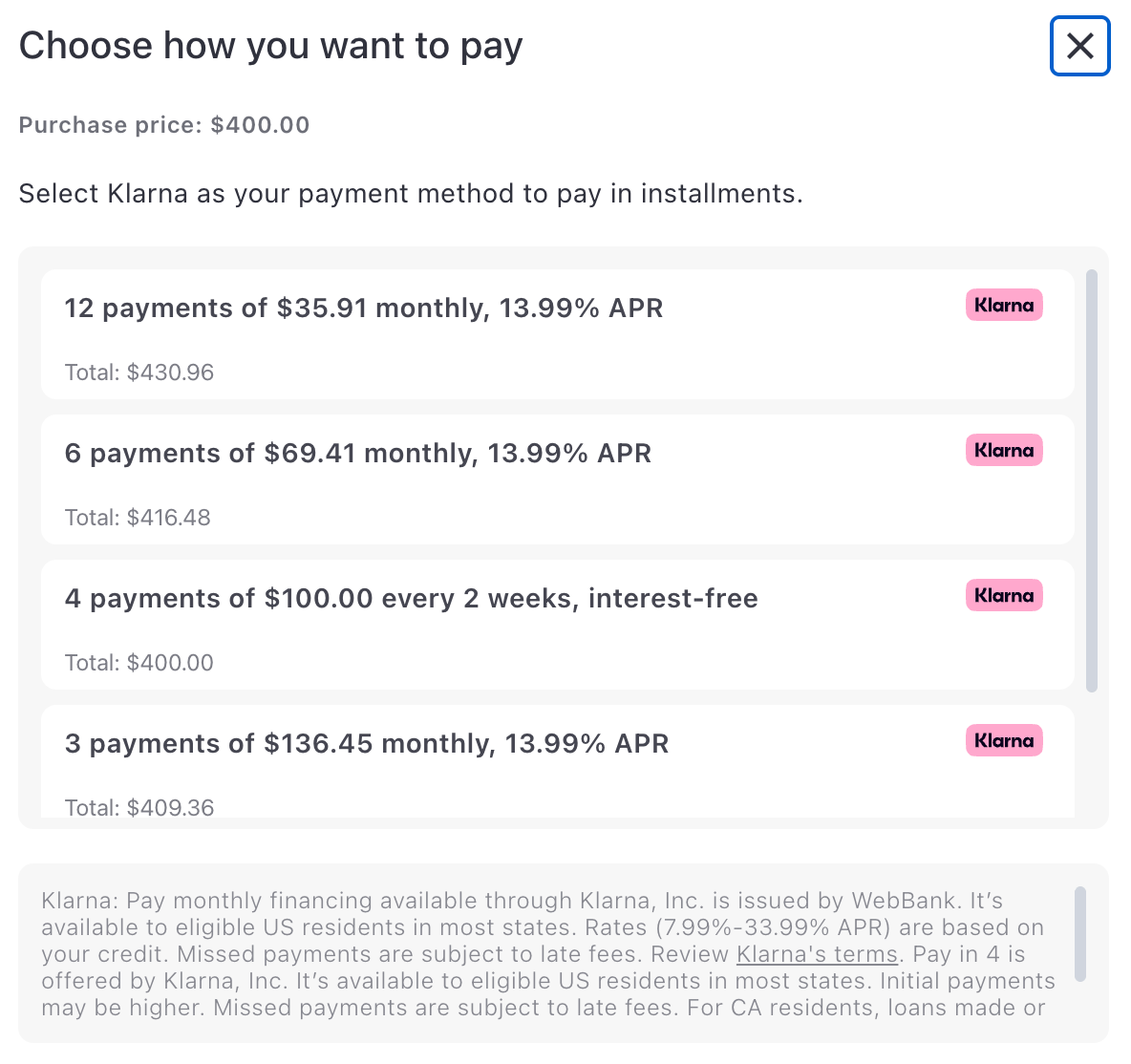
If you’ve enabled BNPL as a payment method, your customer can select a BNPL provider like Afterpay or Klarna and choose a payment plan from a list of options with different installments and interest rates.
The buyer logs in or creates an account with the BNPL provider and finalizes the terms. When approved, they return to Teachable and we confirm their purchase.
Traditional payment plans delay your earnings as you wait for installments from your customers, and more than 60% of payment plan sales end without the buyer successfully completing all payments.
With Buy Now Pay Later, you receive immediate payment in full, regardless of the number of installments or the billing schedule chosen by your customer. Crucially, this also eliminates the risk of failed payments; any payment issues are between the buyer and their BNPL provider. If the buyer misses a payment or fails to complete the payment plan, you still keep your full earnings.
BNPL increases the buying power of your customers, allowing them to buy more of your products or consider higher price points.
Industry estimates expect a 20-40% increase in average order value (AOV) when BNPL is offered, and we see similar trends on Teachable. Comparing schools selling into the same market, on average those with Buy Now Pay Later enabled have an AOV over 60% higher than those who don’t. Schools with BNPL see an up to 15% increase in AOV after enabling the feature.
Missing a preferred payment method is one of the top reasons for cart abandonment. As BNPL becomes more popular, many purchasers expect to see it as an option at checkout, and may reconsider purchasing a product which doesn’t support it.
Not all businesses benefit from BNPL equally, and you may need to update your strategy to make the most of it.
We offer BNPL as a payment method for one-time purchases, and purchasers prefer to use it for higher-priced products.
Explore a pricing model where you offer either an intensive single course or a collection of related products for a single, relatively high price point.
On Teachable, you can use our bundles feature to combine different products into a single, sellable package that can be sold at a premium. That’s a great opportunity to leverage BNPL in your pricing strategy.
Alternatively, if you already have a high price point product that you offer a payment plan model for, consider offering a higher, one-time payment option to replace or supplement it. Your students will have more payment options to choose from, and you won’t have to worry about managing their payment plan.
When implementing this strategy, it’s essential that your students know they can pay in installments using a BNPL provider.
Include messaging on your sales page that lets students know about available payment methods—and that they don’t need to pay the full price upfront if they don’t want to.
If you use a Teachable sales page or product detail page, we take care of this for you with dynamic messaging based on your pricing plan and the student location, so your student knows exactly what BNPL providers to expect, and what options they’ll have:

There’s no better time than the new year to review your pricing and the payment options you offer. Try our Buy Now Pay Later on Teachable this year and see how it can help grow your business!
For more information on how to enable Buy Now Pay Later, eligibility requirements and fees, please visit our Help Center.

Your top priority as a business owner is to increase sales and generate revenue. But once you build a business with consistent revenue, other questions start to break your focus. How do I deal with refunds? How do I not let chargebacks impact my business? How do I deal with fraud?
None of those questions are inherently exciting, but to enable you to do the exciting creative work, you need to take care of your bottom line. Teachable has invested time to create a payment gateway that not only makes it easy to sell, but also helps you tackle chargebacks and fraud. We’ll show you how we’re working with you to fight chargebacks and with risk detection.
As a business, you never want to get a chargeback—whether you’re just selling one or a dozen courses. It’s time consuming to dispute the chargebacks and you lose the sale and additional chargeback fees. On top of that, the standard industry maximum for chargeback rates is 1% of monthly transactions, which can be quite difficult for creators who are just getting started.
That’s why with our native payment gateways, teachable:pay and Monthly Payment Gateway, we’ve added additional features to support our creators, small or large. With our native payment gateways, we have helped our creators keep an average chargeback rate of 0.18-0.20% in the last 6 months, lower than most companies that average at 0.50%. Here’s how we do it:
When you sell your courses with our gateways, we require our creators to enforce a 30-day refund policy. This not only gives you the option of offering a no-risk guarantee on your product, but it also reduces chargebacks from any potential dissatisfied student.
Instead of waiting for a chargeback on a fraudulent charge, we added a feature that allows you to tackle this in advance. Stripe, the service Teachable uses to process card payments, describe potential fraud warning as:
Notices generated by card issuers to flag payments that are suspected to be fraudulent. An EFW is created when a cardholder lodges a claim of fraud with their issuing bank and occurs before an official chargeback.
Whenever a transaction triggers a potential fraud warning, you will receive an automated email letting you know which transaction it is and what next steps you can take. In addition to the automated email, you can also filter your sales with the “Potential fraud” tag directly in your admin.
To prevent potential chargebacks, you can proactively reach out to these students to ensure they’ve intended to purchase this course, or automatically un-enroll them and refund the charges.
In addition to the potential fraud warning, our risk team also looks for “bad actor” behavior that might cause potential harm to our creators. To track these behaviors, we look at the student’s submitted email, timestamp, transaction, and more to see if there’s a trend of the purchaser testing stolen credit cards. Once these bad actors have been identified, their emails are added into our block list which prevents them from purchasing any courses hosted on Teachable, thus reducing any potential for future chargebacks for you.
Unfortunately, you can set your course and payments up correctly and still get hit with a chargeback. If you do get a chargeback, we have a process and team that will help increase your chances of winning the dispute in your favor.
When you sell your products using our native payment gateways, Teachable automatically disputes the challenge on your behalf with the information we have: product ID, course ID, course owner, and time and date of the course purchase. Because timely response and dispute evidence are important, this minimum supply of information generally results in a favorable chargeback win rate.
In addition, we also send you an email whenever you get a chargeback. You have the option of disputing the student chargeback with any additional information you have. This can include communication with the student, engagement from students within comments, or more. With this process, our win-back rate is around 30%, on average 8% higher than the industry average.
One of the benefits of using our native payment gateways is that we manage the chargeback ratio in aggregate of all the creators running their business on our platform. This means even with a monthly maximum of 1% chargeback rate threshold, we can incur more chargebacks than a single small business owner.
Let’s break it down:
Example A: A course business owner who just started selling courses and has 100 transactions in one month, two of which are chargebacks. This means business owner A now has a chargeback rate of 2%, which is over the threshold.
Example B: An established course business owner, who consistently has 1,000 transactions every month, also has two chargebacks. Business owner B is well under the chargeback rate threshold at 0.2%.
This is how the chargeback rate can have much bigger effects on smaller creators. Now, let’s say both owner A and owner B both use Teachable’s native gateway. Together, in one month, there are 1,100 transactions and four chargebacks, bringing the chargeback rate threshold to 0.3%, which is still well below the maximum threshold.
Our payment gateways allows us to give smaller creators who are just getting started more room and flexibility to manage their business and reduce chargebacks. Our risk team oversees the daily chargeback rates and reaches out to creators personally to let them know about their chargeback levels and offers tips to reduce them.
Teachable:pay and our Monthly Payment Gateway is the best way to accept payments for your digital products—not only because you can accept all major payment methods, but also because we invest in the less exciting parts of running a business such chargebacks and risk detection with fraud. We help you squash the little things, so they never become too big to handle.
{{tpay-component="/blog-shortcodes/blog-popup"}}

The first time seeing your course earnings in your dashboard is a key milestone. For many course creators, the focus is on how to continue growing sales and delivering a course students love. As you grow, new challenges arise. You may get students from different locations, and as a business owner, you have to figure out how to track student location, charge sales tax, remit them. That’s where Teachable can step in.
We know creators come to Teachable because a desire to grow an online business. What’s more, we know you want this process to be as streamlined as possible. That’s why we’ve invested the time and effort in developing our native payment gateways—teachable:pay and Monthly Payment Gateway—to answer your immediate needs when you start. We also want to continue our support along the way.
Our native payment gateways are the simplest way to accept payments online—but the benefits go beyond helping you get access to your money faster. When you use Teachable’s Monthly Payment Gateway, we also handle your US sales tax and EU VAT. With this, there’s no additional integrations or extra work. We automate the process to collect and file US sales tax and EU VAT for you. That way, you don’t have to deal with additional accounting work every quarter.
US sales tax is always evolving and impacting anyone selling to an US audience. Adding to this complexity, each state may charge different tax rates and may charge sales tax on different products. With Teachable, when a sale is processed through our native payment gateways, we not only accept the payment, but also handle when and how much sales tax needs to be charged, collected, and remitted.
With teachable:pay and our Monthly Payment Gateway, we handle US sales tax on any of your product purchases (when applicable) directly at checkout. We also file these taxes in the required states, eliminating any time and cost you may otherwise need to dedicate to auditing your transactions.
One common reason creators move their content online is to reach a global audience. Similar to US sales tax, when you’re using teachable:pay and our Monthly Payment Gateway, we also file EU VAT.
The European Union Value Added Tax—or EU VAT for short—is generally charged on purchases made by customers in the EU. EU VAT applies to any merchant selling a product or service (including digital products like an online course) to a customer based in Europe, regardless of whether that merchant is located in the EU.
By using Teachable’s native payment gateways, we automatically charge and collect EU VAT on all purchases made from the EU. Teachable then remits the collected taxes through the VAT OSS system every quarter to make sure each appropriate EU tax authority receives the applicable taxes. This means when the EU VAT rates are adjusted, Teachable will automatically adjust the rates, too.
Bottom line, teachable:pay and our Monthly Payment Gateway are the best way to accept payments for your digital products. Cut third-party costs and skip the additional tech setup headaches. We accept all major payment methods, handle your team’s payouts, dispute chargebacks on your behalf, and collect and remit taxes in certain jurisdictions, including the EU and applicable US States. With teachable:pay and our Monthly Payment Gateway, you can launch your online course and expect us to support you as you grow.
Disclaimer: At Teachable we love providing helpful information for creators getting started with their business. We provide helpful information about taxes, but we are not certified tax professionals. You should always consult your own tax, legal, and financial professionals to determine requirements related to your individual business.
Teachable DOES NOT provide legal or tax advice to users of teachable:pay. By using teachable:pay, You are solely responsible for obtaining any such legal advice and tax advice that You consider appropriate in connection with Your use of teachable:pay.
{{tpay-component="/blog-shortcodes/blog-popup"}}

We empower and enable creators to transform knowledge into income with our seamless, stress-free platform. And, as any experienced entrepreneur will tell you, the income part gets complicated quickly. That’s why we launched our payment gateways. Now you can get paid without getting frustrated. If you’re already using our native payment gateways—teachable:pay and Monthly Payment—you’ve already experienced all the ways we’re making running an online business a little easier in terms of payments and taxes.
If you haven’t set up our gateways yet, find out why you should as we take a deeper dive into exactly how teachable:pay and Monthly Payment Gateway can get you back to the heart of what you do best: creating.
Before we get into the hows and whys, it’s important to note that we have two payment gateway options. The first, teachable:pay, is available for members who reside in North America, and select European and Asian countries. (For a full list of countries eligible for teachable:pay, please see here.) The second, Monthly Payment Gateway, is available for members located elsewhere.
And, regardless of which payment gateway you utilize, it’s easy for your students to have multiple purchasing options when it comes to buying your courses. Because we know you want the fewest steps to buy and the highest conversion rates, we offer a number of purchasing options, including credit/debit cards, PayPal, Apple Pay®, and Google Pay™, meaning your students are only a click away.
You can learn more about how to set up the respective Teachable payment options here, but the important thing to know is how the two differ. Namely how they both work to get you paid for your work.
Due to Teachable’s 30-day refund policy for courses, Teachable pays creators using the Monthly Payment Gateway on the first of every month (or the next business day if the 1st is on a weekend or US holiday). This means if you make a sale in January, you will receive those funds from Teachable on March 1. Then, on April 1, you’ll be paid for sales made in February and so on.
Creators using teachable:pay, on the other hand, receive course earnings daily, weekly, or monthly. This means credit, debit card, and PayPal transactions are paid out directly to your bank account via Stripe. This is based on the payout schedule set by the primary owner of your school, aka you.
Teachable:pay takes away a bit of that wait time so you get your money faster and can start re-investing in yourself and your course.
But, a faster payout isn’t the only reason we launched our own native payment gateways. If you’re using your own custom checkout other than Teachable to sell your products, you’re responsible for collecting and remitting EU VAT and U.S. sales tax. You need to figure out how to collect and remit taxes on all your product sales and how to handle payments for your affiliates. Chances are, you require an accountant or some serious time and attention on your hands to tackle it all
We’ve learned from creators and entrepreneurs that no one wants to be bothered with busy work in business. You know, those small tasks that distract from the actual creating you want to do.
Unfortunately, busy work is unavoidable when running your own business. And, when we’re talking about things like setting up payments and collecting taxes, these tasks are particularly important.
Unlike some of our competitors, we’ve taken creators’ desires to heart. We want you to get back to what you want to do and not just what you have to do to run a business. Teachable:pay can make it possible for you to do just that.
“Anything that can automate stuff where I don’t have to do it is just heaven to me.”
{{tpay-component="/blog-shortcodes/blog-popup"}}
For Teachable course creator and Squarespace web designer, Paige Brunton, this played a huge part in her consideration to use teachable:pay. The lower the barrier to entry, the better. As one of our first teachable:pay testers in Germany, Paige saw first-hand how easy it was to reap the benefits of the in-house payment gateway.
Although she previously was on third-party checkout with her Teachable courses (she has three!), she switched to teachable:pay to streamline her process and take away the burden of tracking down students’ locations. It also took care of registering in multiple countries, and paying EU VAT to all the various locations. Most of which were tasks she never even knew she had to do.
“I always had an accountant or a tax advisor doing it for me,” she said. “But I would also rather make it easier than that.”
What’s more, by transferring over to teachable:pay, she saved a bit of money in the process.
“It was just a lot of stress at the end of every quarter,” she explained. “And then, it was costing us quite a bit to pay this accountant to do all the filing for us and everything. So anything that can automate stuff where I don’t have to do it is just heaven to me.”
It’s not enough that we want to get you paid faster, we’re also planning the growth of your business. When you first start out, you might be a one-person team, handling content development and marketing all on your own. As your business starts to scale, you find yourself with less time but growing a larger network of robust affiliates.
Using either the Monthly Payment Gateway or teachable:pay, you can opt-in to BackOffice, which provides services such as automatic author/affiliate payouts. On Teachable, you start working with others seamlessly and begin inviting other creators to be authors on your products. Similarly, you’ll find yourself with an audience who will root for your product and help you market it. That’s when you bring on affiliates.
In both cases, you can set how much revenue share and commission you’ll split with your authors and affiliates. You don’t want additional accounting work. And we don’t want that for you either. That’s why with teachable:pay or Monthly Payment Gateway and BackOffice, we manage their payouts for you every month. We even make sure they have their tax forms in place.
By simplifying our gateways and moving everything over to teachable:pay or Monthly Payment Gateway rather than a third party, we can offer you a streamlined, all-inclusive way to get paid for your courses and coaching.
Most importantly, we can get you back to creating and sharing a lot faster.
Disclaimer: At Teachable we love providing helpful information for creators getting started with their business. We provide helpful information about taxes, but we are not certified tax professionals. You should always consult your own tax, legal, and financial professionals to determine requirements related to your individual business.
Teachable DOES NOT provide legal or tax advice to users of teachable:pay. By using teachable:pay, You are solely responsible for obtaining any such legal advice and tax advice that You consider appropriate in connection with Your use of teachable:pay.

The knowledge economy isn’t new, but the way small business owners and creators see themselves in it has certainly changed in recent years.
“Infopreneur” was initially coined by researcher H. Skip Weitzen in the 1980s. But the role of the infopreneur has changed and grown over time along with the leaps and bounds technology has made. Today there are more ways than ever for infopreneurs to earn money by sharing their knowledge. From selling online courses, digital products, and online coaching, to working on partnerships or affiliate sales on social media, the infopreneur is thriving.
Whether you recognize it or not, you might fall into the category of infopreneur. It’s a balanced blend of entrepreneur, online creator, and teacher without much of the risk that comes with starting a small business.
An infopreneur is exactly what it sounds like–an entrepreneur who makes money by selling their knowledge in a specific niche. If an entrepreneur sells lemonade then you could think of an infopreneur as selling the lemonade recipe.
One of the most famous infopreneurs of the modern era is Tony Robbins. Robbins sells his knowledge as a self-help coach to motivate people in the form of books, seminars, and coaching.
Similar to social media influencers who focus on specific topics, infopreneurs also focus on what they know. Whether that’s finance, an art form, yoga, baking, or anything else, it can be the specialty of an infopreneur. So, if you’re looking to become an infopreneur, the first step is to think about what you can start teaching others.
One of the key differences between an influencer and an infopreneur is how they earn money. Influencers predominately rely on sponsored posts and partnerships for their income. Infopreneurs convert their knowledge into content they can monetize, like e-books, online courses, video tutorials, and even webinars and community membership.
Of course, it’s possible to make money as an infopreneur in the same ways that influencers do too. Some infopreneurs have sponsorships or offer exclusive content to subscribers, much like an influencer. However, many infopreneurs earn the bulk of their money outside the traditional influencer methods. Working outside of sponsorships and creator programs means infopreneurs can go algorithm free. They have control over the audience they’ve built and can interact with them on their own terms.
The ways to make money as an infopreneur are close to endless. But there are a few tried and true methods for creators to explore.
Ebooks and digital downloads are excellent ways to share knowledge while offering students a lower price point and lower commitment. The process of creating an ebook is very similar to writing a physical book, but it comes at a significantly lower cost. Sometimes, authors will partner with a traditional publisher, although, it’s not required. An ebook simply has to offer your students the knowledge they want to learn from you. If a whole ebook feels daunting, start with something smaller like a how-to guide, a template, or a worksheet instead.
Another great method of earning money and sharing knowledge is through online courses. For those who have never created an online course, it can sound overwhelming at first. But you can start small by creating a mini course. We even have a course curriculum generator to help you get started.
Online courses provide flexibility and the option to learn anywhere at any time. But some people thrive in one-on-one settings that online coaching can offer. By having a good idea of what your audience prefers you can choose the right product to offer them.
Infopreneurs have a ton of options available to them to earn income and can utilize every social media platform that other content creators use. However, infopreneurs would also be wise to check out Linkedin as a content creator platform because, with its 930 million users, it’s a hub for people searching for information.

Your company’s value is defined by what it offers: products, services, and attention to customers. But if your business offers more than one thing, you need to fully grasp your product mix, the full range of your offerings customers. Let’s take a closer look at what product mix is, how it works, and how you can improve your business’s product mix for even more profits.
In a nutshell, product mix – also called product assortment – is the total number and variety of product lines that your company offers to its target audience and customers.
Say that you run a business that creates athletic leisure wear for physically active men and women. Your business might make a variety of products, such as:
The product mix refers to the set of different product lines or product types you produce. The market mix includes the products your company offers through major distribution channels. Or products you offer through subsidiary brands or companies.
Regardless of your business’s industry or focus, the product mix consists of four major factors:
Product mix can be a very important element of marketing campaigns and long-term strategies.
Say that you want to expand your target audience or customer base. One of the best ways to do that is to analyze your product mix. See if there are any areas in which you don’t offer products that your competitors do.
Let’s take the above example of an athletic clothing company. Say that you analyze your product mix and find that you only produce athletic clothes. But competing companies in the same niche offer sports drinks, protein powders, and athletic accessories, such as fitness devices or tools.
By analyzing your product mix, you can identify a gap in the products or services you offer that you might be able to take advantage of. Once you figure out which new products you plan to offer, you can highlight these with your upcoming marketing campaigns and materials. Featuring it all in online ads, social media announcements, your website, and more can all be beneficial.
Put another way, the product mix is important in marketing. It helps you market the right messages to the right customers. And it’s a way to target or focus your future expansion and new product offerings. Or it can be the reverse and offer a way to slim down your product offerings for cost savings purposes.

Let’s take a look at another example of a product mix, this time from the real world.
Coca-Cola has a very simple product mix. But let’s assume that it only oversees two distinct product lines: juice, such as Minute Maid beverages, and soft drinks, such as Coca-Cola or Sprite.
In this case, Coca-Cola’s product mix consistency would be very high. All of the products it makes are edible and are types of beverages. This enables Coca-Cola to use similar product and distribution channels for every product and its catalog.
Product length includes both juice beverages and soft drink beverages. While the product mix width includes the total number of distinct juice and soft drink beverage lines made by Coca-Cola. And the product mix depth includes the total number of variations between different beverages, such as all the variety in soft drink beverages.
By understanding its total product mix, Coca-Cola can make better marketing and manufacturing decisions to increase its bottom line and profitability.
While product mix and product line are similar concepts and are oftentimes interchanged, they aren’t exactly the same.
Remember, a product line is one line of similar products that are sold by an overseeing company. The product mix is the combination of all the different product lines sold by that company. In other words, product lines are parts of product mixes, but the reverse is not true.
Furthermore, a company may have several product lines, especially if it has a diverse customer base. But that company can’t have more than one product mix. The product mix is the total diversity, width, length, and depth of its combined offerings.

There are many ways in which you can improve the product mix of your business, though the exact strategy you should use depends on your goals.
For example, say that your business is stretched a little too thin. You’ve taken a look at your cash flow and your product mix and determined that the mix is too wide for your customer base. You make too many products of too many different types for your brand to be profitable.
Therefore, you can analyze your product mix and determine which products can be sized down or eliminated entirely from your offerings. That way, you spend less money on manufacturing products and make more money from concentrating your marketing on the bestsellers.
You can also follow the reverse strategy, as detailed in the earlier example. For instance, you can look at your product mix, figure out that you have a gap in the types of products you offer to your customers, and fill in that gap with a brand-new product line that your customers will love after an aggressive marketing campaign.
You can also straddle the line between these two strategies and deepen your product mix depth. To do this, rather than creating a completely new product line, you instead add new products to an existing line. This can be quite cost-effective while still resulting in more profits as the product line should theoretically already have customers who are looking for new items or improvements to their existing stuff.
Product mix is ultimately quite important for any brand that wants to maximize manufacturing and marketing efficiency. If you fully understand your product mix, you can identify areas in which you can introduce new products as well as determine which types of products you should create to take full advantage of your existing manufacturing resources.

In the creator world, buzzwords and acronyms abound. And while not everyone is relevant to you, UGC might be one to pay attention to. First off, what does UGC stand for? Simply put, UGC is an acronym for user-generated content and has been a tried-and-true marketing tactic for brands for years. Brands rely on this user-supplied content as a way to garner social proof, promote their product or service, and market themselves.
However, gathering authentic UGC—and lots of it—can be difficult, especially if you’re a newer brand. This is where UGC creators come in. UGC creators help brands develop an entire library of user-generated content that doesn’t feel pushy or promotional and resonates well with each brand’s target audience.
In this post, you’ll learn more about what exactly a UGC creator is, what a UGC creator does, and how you can become one to bring in even more income.
{{guidecreatoreconomy-component="/blog-shortcodes/blog-popup"}}
UGC or user-generated content (otherwise known as consumer-generated content) is original and authentic content created by customers about a brand or a product at no cost to the brand. It can be a short-form video like a TikTok or Instagram Reel, an Instagram post, a review, or a testimonial.
Originally, UGC was organic content that didn’t cost a brand anything. What people say about their product and how they showcase it was out of the brand's hands. However, once brands noticed how successful their customer creative efforts were, they started to use paid UGC, meaning they paid professional UGC creators to create UGC for their products.
A UGC creator is a content creator who focuses specifically on creating user-generated content for brands. While this is paid content and not organic UGC, it still follows the same formula that makes organic UGC work so well.
User-generated content is so popular because it appeals to the social proof side of marketing psychology. Social proof is a phenomenon that dictates that consumers tend to copy the actions of others to emulate their experiences. For example, if someone sees a TikTok video of a woman with great skin sharing a skin care product she loves, they will be much more likely to purchase that product than if they saw an ad directly from the brand talking about the product features and benefits.
This is where UGC creators come in. They are paid to create that content—the type that entices regular everyday consumers to make a purchase because they see other regular everyday consumers use it and enjoy it.
A content creator is a professional who creates content for brands for a living. They might create blog content, graphics, videos, ebooks, online courses, and more. Content creators differ from UGC creators as UGC creators tend to make this type of content on the side. They’re regular social media users rather than professional creators.
Influencers focus on building up their audiences. They also work with brands for paid promotional content, but they’re typically sharing the content on their own social media sites rather than sending it to the brand for their content platforms.
Influencers must have a large audience for them to appeal to brands. UGC creators don’t need any type of audience—they just need to be able to create good content for the brands to use.
{{guidecreatoreconomy-component="/blog-shortcodes/blog-popup"}}
If UGC content creation sounds like something that might be right up your alley, let’s walk through a few steps you can take to become a UGC creator all on your own.
This tip is the same across the board, no matter what type of content creation business you find yourself getting into. Niching down helps you attract more of the businesses that you actually want to work with. Plus, then you have a portfolio filled with content that looks like what they’d probably be looking for. Choose a niche that you actually enjoy and are passionate about. For example, you might focus more on makeup or skincare products. You might want to work with home and gardening brands. Or you could choose to create content for cooking companies.
It’s not necessary to completely box yourself in—feel free to take any kind of work that you think seems interesting. But you don’t want to accept projects just for the sake of it to realize you have zero inspiration down the road.
UGC content can consist of a number of things—case studies, graphics, photos, and videos—but one of the most common types that brands hire creators for is video content.
This means that once you’ve decided what types of businesses you’d like to work with, it’s time to set up your filming. You’ll need the right tools to record and edit your footage, as well as a nice, bright area to film in.
You can simply use your smartphone to record your video footage, but other tools you might want to acquire include:
Once you’ve got your filming setup ready to go, it’s time to create sample content to build up a portfolio. Many UGC creators will grab products they already have and use those to create examples of the types of UGC content they could create for other brands.
Put together several videos—ideally using products within the niche you hope to work in—and add them to your portfolio. You can create your portfolio using a tool like Canva and then easily share it with prospective brands.
The next step is to begin outreach. Create a list of brands you’d be interested in working with and locate their social media handles, websites, and any other potential contact information.
Before you start your outreach, create an email address and social media handles specific to your new UGC creation business. Use these new profiles to follow all of the brands on your list. You can also start to network with other creators in the community.
Then, start interacting with all of the brands you’d like to work with as well as any marketers or founders you can find for each one. Formulate your pitch and share it with them either on the social media platform you’ve been using or via email.
When you first start, finding work might be a slow process, but don’t be discouraged. Keep pitching, and eventually, you’ll start seeing some deals come in.
Like with any other creative endeavor, there are pros and cons to creating user-generated content.
User-generated content is fairly easy to create. Even if you don't have any video creation experience or fancy filming equipment, you can learn how to create UGC with your phone alone and a little bit of practice. You don't need a studio or professional background--you can easily film your content in the comfort of your home or any other spot (coffee shop, beach, friend's house, etc).
Because of its casual nature, UGC also doesn't have to be highly produced, so the editing should be minimal and mimic regular content from people you see on social media platforms.
While it's pretty easy to get started with UGC, and it requires minimal skills and effort to produce, it can take time to learn the best tactics for creating engaging content. When you create UGC, you want to show the brand that you know how to hook the viewer and showcase the best side of the product you're creating content about.
That might require some trial and error and studying the best UGC examples to get it right. You might want to invest in a UGC course from other content creators to help you understand the specifics and strategies better, or simply try and test out different tactics yourself and learn from your experience.
Probably one of the biggest pros of being a UGC creator is the great earning potential. While as a beginner, you might start off charging only $50 per piece of content, you can easily increase your rates with experience. The sky is the limit when it comes to how much money you can make doing UGC for brands, and it makes it a very lucrative creative endeavor.
It's no secret that success on social media platforms like TikTok greatly depends on understanding trends. Those trends change more rapidly than ever, which means that to create engaging, trending content people want to see, you'll have to be quick at recognizing trends and jumping on them at the right moment to maximize the gains.
While it might not be a con for some, it might be a huge disadvantage for others. So, before you jump into being a UGC creator, that's something worth thinking about and considering how to navigate to get the best results for your clients.
{{minicourse-component="/blog-shortcodes/blog-popup"}}
There are also a number of platforms that UGC creators can join to help them find work. Social media in itself can be powerful, but here are a few platforms to pay attention to.

Join Brands has a creator platform that interested creators can join. Rates start at $60 per video and $15 per photo—plus free product to use when creating the content. Easily sign up to be a creator with Join Brands and start getting work with big brands in your preferred niche.

Billo is an app for video UGC creators to find clients and get paid. There are two tiers: Beginner Creator and PRO Creator. Beginners can have a basic film setup and is the perfect starting place while PRO creators are required to have a full film setup and professional knowledge of product video creation. This app is for US-based creators only.
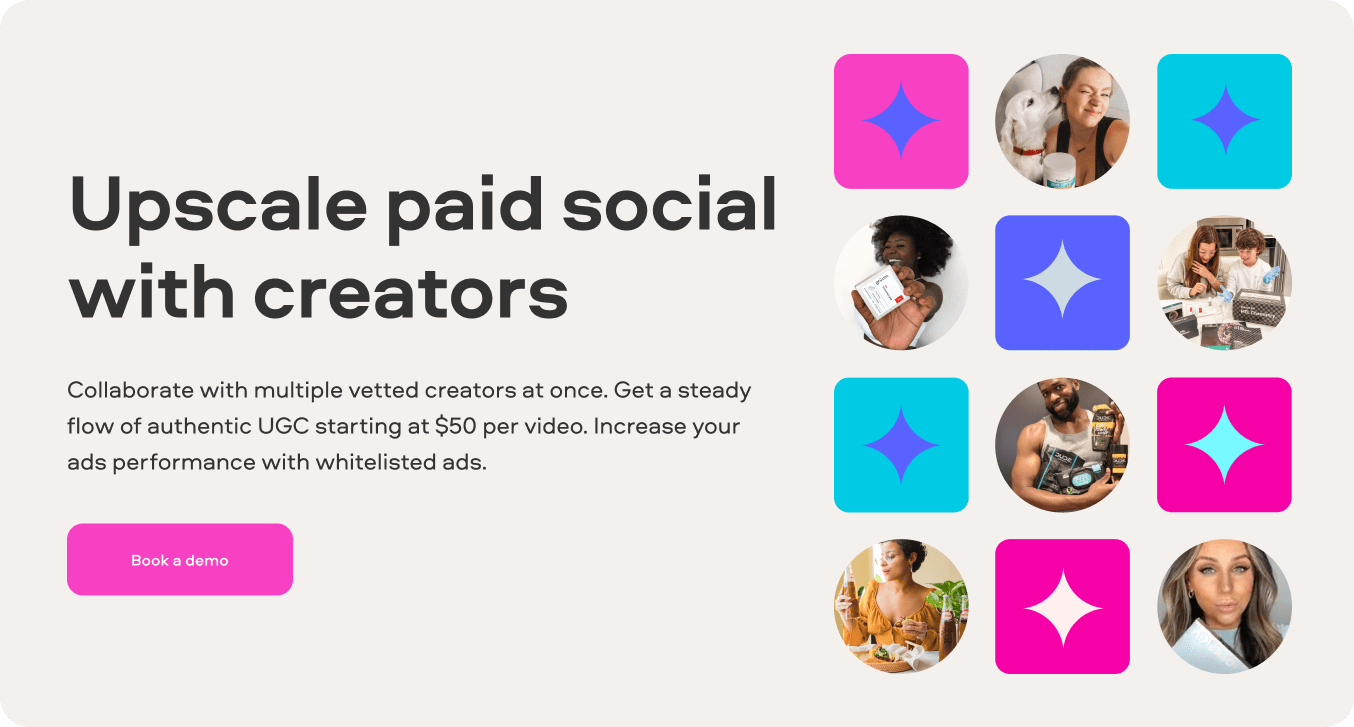
Insense is another app made to connect creators and brands. The cost for brands starts at $50 per video, so the payout per video is somewhere in that ballpark for creators. It’s easy to apply and start finding brands to work with. Some creators working with this platform have made thousands of dollars creating UGC.
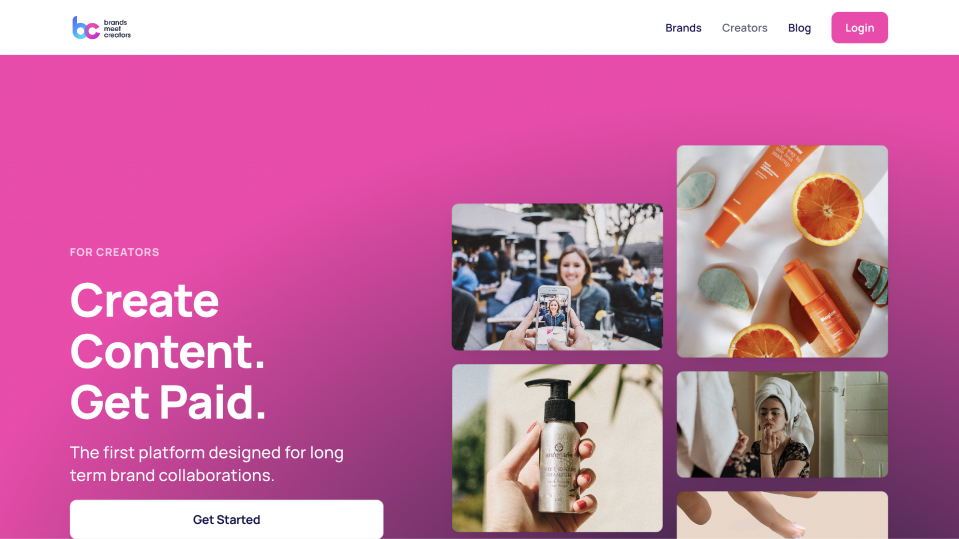
Brands Meet Creators is essentially like a job board to easily connect brands and creators. Creators can sign up to receive emails of opportunities or check out the board of available creator jobs. You can apply to jobs that interest you and brands get to sift through the applications to choose the best fit.
Upwork is a creator marketplace for all sorts of creative jobs—writing, video editing, graphic design, virtual assisting, and so much more. But the platform also has plenty of UGC creator jobs to check out as well. Look through the gigs to see if any interest you and start applying.
Target Creator Program is an affiliate program where creators earn commission on sales they attract by creating content. The commission rates are up to 8%, and anyone is free to apply (however, not everyone will be accepted).
Trend is a platform that connects brands who need UGC content with creators who want to get paid for creating UGC content for brands. They have an iOS app where you can browse gigs (they add them daily), apply, and submit content. One advantage of Trend is that they provide their creators with free products and monetary payment on successful brand deals.
Tribe is another great platform to find UGC gigs in one place. You need 3,000 followers to start making money. You pitch brands your creative ideas for Instagram and TikTok campaigns, which allows you to really tap into your creativity and show off your skills.
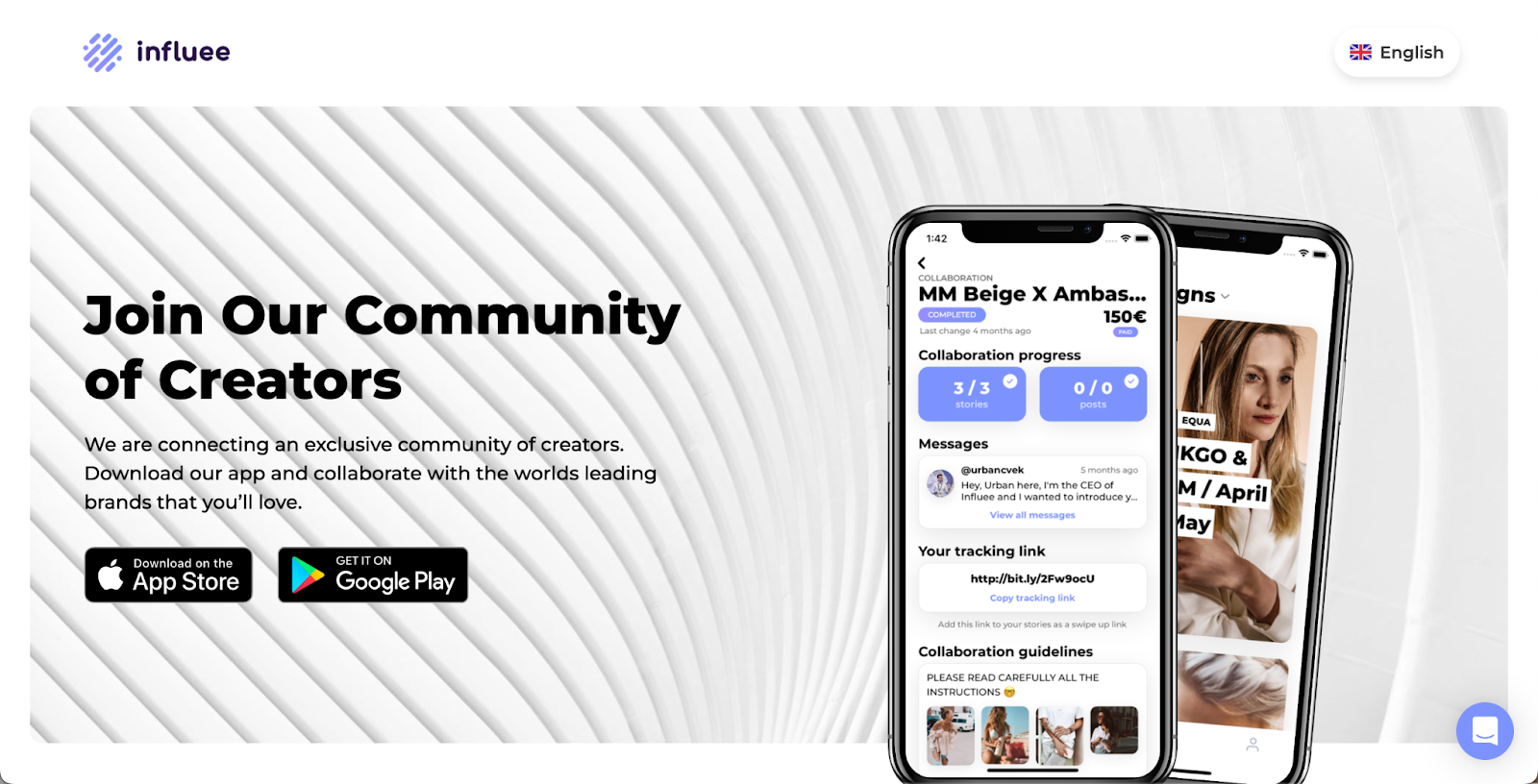
Influee is a global agency that connects brands and UGC creators. They have an app where you can browse and apply for gigs with brands, which is super easy and convenient.
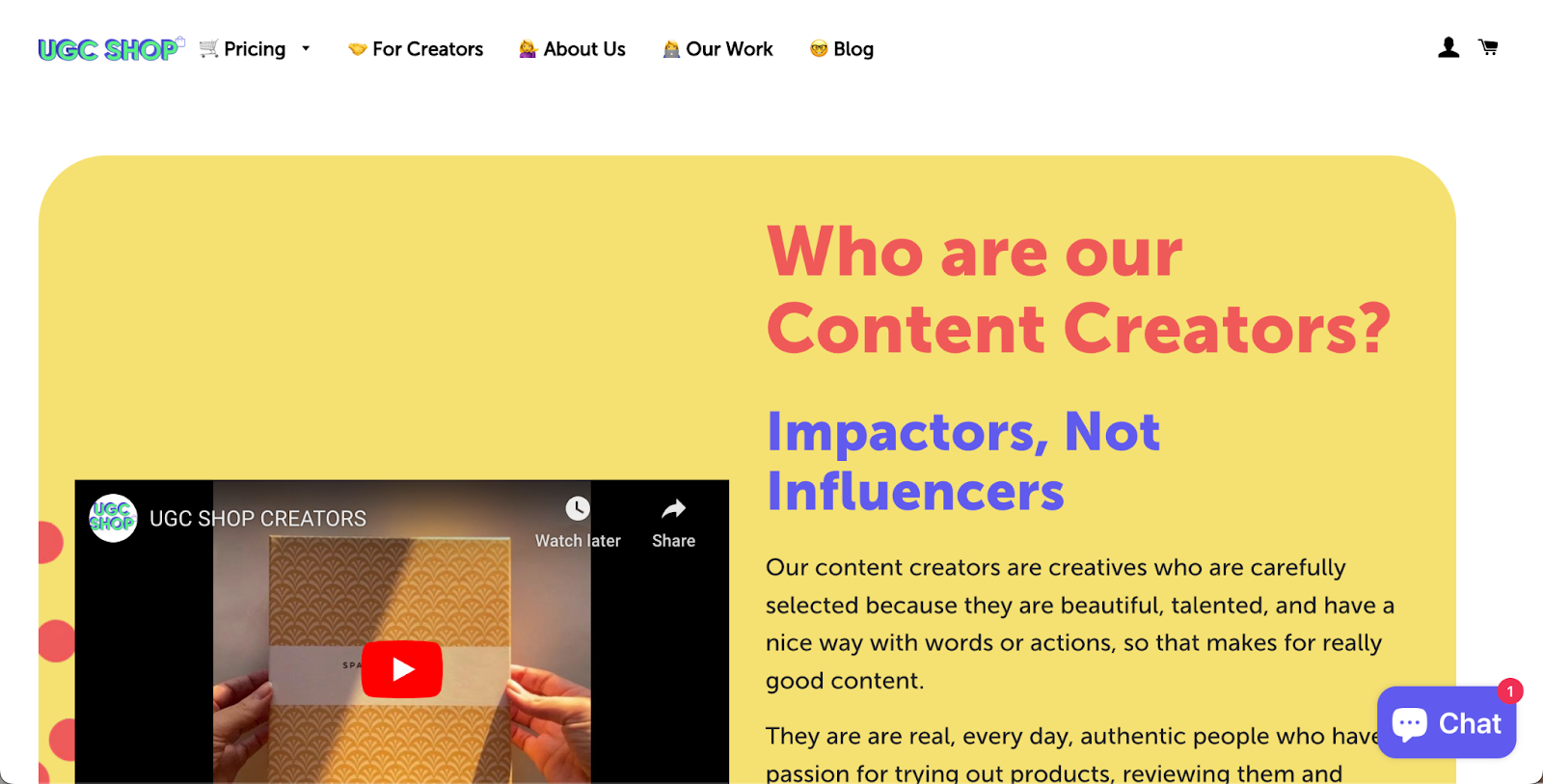
UGC Shop is a smaller global agency and online platform that works with brands and UGC creators. Anyone can apply, and you don't have to live in the United States to be eligible to start working with brands, receive free products, and get paid.
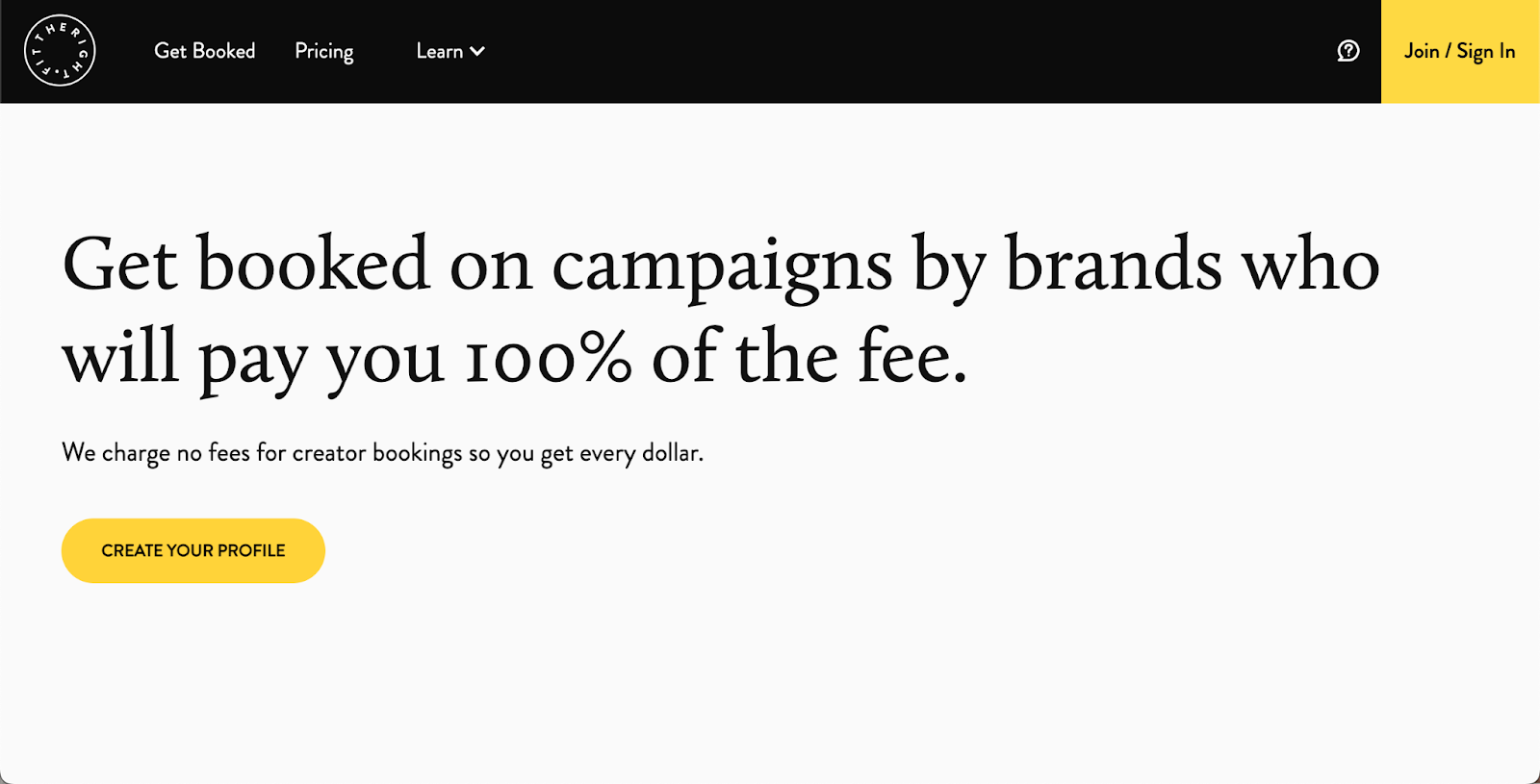
The Right Fit is a platform where you can create your creator profile, browse available brand partnerships, and then apply for jobs that fit your experience and personal brand. You can manage all the applications, collabs, and content directly on their app, which is quick and convenient.
To give you a better idea of what being a UGC creator is like, let's look at a few successful UGC creators.

Emma is a full time UGC content creator and strategist. She has worked with a variety of brands to help them create engaging UGC. On her website, she has portfolio that showcases the high quality videos she created, and brands she collaborated with, which include Girl Code, Waterdrop and more. She makes around $7-8k/month from UGC partnerships.
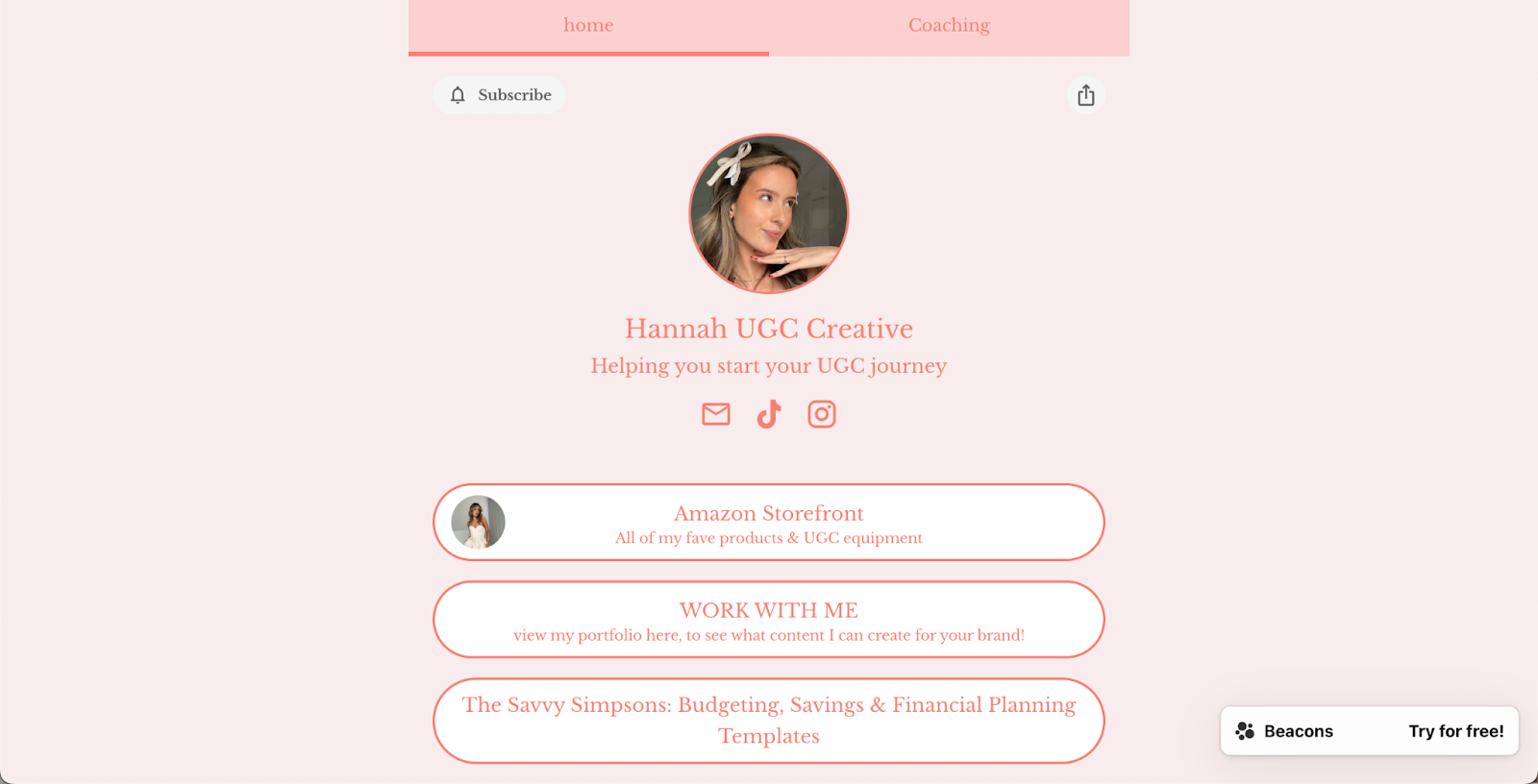
Hannah is a full-time UGC content creator and mentor from the UK. She creates beautiful aesthetic videos for her own platform and for brands. She mainly focuses on hair and beauty, wellness, jewelry, and fashion industries and has worked with brands like Motel, Wild, GHD London, and more.

Ashlee is a full-time UGC content creator from Australia. She creates content about hair, beauty, wellness, food, and lifestyle and has worked with brands like Wild, Esmi, Afterpay, and more. Her rates start at $150 AUD for a video, but she offers various packages for brands to choose from.
Now, let's answer some of the most frequently asked questions people have.
Yes! UGC creators can make a good part-time or even full-time income. How much UGC creators will make can vary greatly due to their niche, following, and results. If you can demonstrate to the brand that you can create content that generates engagement, you can charge much more than other creators in your niche who have the same following.
One UGC creator on TikTok shares that in 2023, she made between $7-8k each month from UGC content alone. Another UGC creator on TikTok shared that, on average, she makes around $15k per month by creating UGC content for brands. As you can see, the sky is the limit here.
Your rates will depend on your experience and the size of your portfolio. Minimum rates might start out at $50 for a single piece of content and can go up to $500 or more. One UGC creator and educator on TikTok shares that if you're a beginner, your rates should be $150 for a video and $20-$30 for a photo. She also suggests offering bulk discounts to encourage brands to book content packages with you.
The easiest way to get UGC for your online course is to tap into your past and current student network. Chances are that some of them are creating content, or would be interested in creating content. So, reach out to them and ask if they'd be interested in a collaboration.
You can incentivize your students to create UGC around your course by running giveaways, offering discounts for the UGC they share online, or running contests with prizes. Make it fun and engaging so that your students are more willing to participate.
Yes. But, before using UGC, you always have to get explicit permission from the creator to use their content. This is very important for each piece of content every time you want to post a UGC. The same applies if you create UGC and the brand wants to use it--they should always request your permission.
Some brands do UGC better than others. ASOS uses hashtag #AsSeenOnMe on Instagram to encourage their customers to share their OOTD (outfit of the day) on their socials wearing ASOS clothing. In 2014, on their website, they launched an As Seen On Me section where they feature outfits they choose from people who used the hashtag on Instagram.
Another brand that utilized UGC very well is Aerie. When, in 2014, they launched their campaign against retouching models' pictures, they invited their audience to share their own pictures showing off wearing Aerie clothing with all of their imperfections using hashtag #arieREAL.

The exciting world of video monetization is expanding. It’s not just about YouTube anymore—creators are making their marks (and money) on various platforms. Why is this so exciting?
In this article, we’ll show you the best ways to monetize videos and generate revenue. We’ll also explore how much money you can make, and video monetization platforms beyond YouTube.
Video monetization is the process of generating revenue from your video content. This typically involves leveraging different monetization models, allowing your audience—your users—to pay in exchange for video access.
Video is a potential income stream—you can earn money every time someone watches. How much you make depends on your monetization model.
Understanding the different models can help you choose the best one for your content, audience, and financial goals. Let’s explore three popular video monetization models: ad-based video-on-demand (AVOD), transactional video-on-demand (TVOD), and subscription video-on-demand (SVOD).
In the AVOD model, viewers access your content for free, and you earn income through advertisements that play within your video content.
The key to AVOD success is to have a large, engaged audience base, as more viewers translate to higher ad revenue.
TVOD is like a digital rental or purchase system. Users pay a one-time fee to access a piece of content for a limited period or indefinitely. It’s an excellent model for creators who offer high-value, unique content that viewers are willing to pay for directly.
With SVOD, users pay a subscription—a recurring fee for unlimited access to a library of content. It works well for creators who regularly produce fresh, engaging content.
As we explore video monetization, you might be wondering, “Just how much can I make from my video content?” Let’s crunch some numbers and look at the creator economy’s current state.
The demand for video content is soaring. Statistics show that:
YouTube may take the crown as the most popular video platform. But it’s not the only player in the game. Platforms like Twitch, Instagram, and TikTok also pay creators a percentage of ad revenue when they have high views and engagement. Plus, creators are taking more control over their earnings by selling their own products—including the video courses you see on Teachable—and keeping the majority of their profit.
Here’s a chart comparing average earnings on some popular video monetization platforms. Remember, these figures can change depending on various factors, so consider this a starting point.
The platform you choose to monetize your video will impact how much money you make. A platform with a large audience base could mean more exposure but could tough competition or lower payouts. For example, most YouTube creators monetize through ad revenue but YouTube takes a large percentage of earnings.
On the other hand, a niche platform might provide a smaller but more targeted and engaged audience.
The goal is not just to make money, but to sustainably grow your online business in a way that works best for you. Now let’s dive into the top platforms, their pros and cons, and how creators can make money from each.
The main source of income through YouTube is ads. To be eligible, you’ll need to join the YouTube Partner Program. You’ll need a minimum of 1,000 subscribers and 4,000 public watch hours in the last 12 months. For every $100 an advertiser pays, Google pays $55 to the creator.
Ad revenue is not the only way to make money from your YouTube videos though. Many creators look for YouTube sponsorships with brands once they have at least 10,000 subscribers. Brand sponsorships may take a little more work to secure, but they are also more lucrative. Depending on your channel, you could make anywhere from $1,000 to $5,000 per video starting out.
If you’re thinking about starting a YouTube channel, consider these pros and cons:
Take the example of the highest-earning YouTube star, MrBeast, who earned $54 million in 2021. His consistent quality content has attracted millions, demonstrating the potential of YouTube when creators focus on sharing their unique perspectives and engaging actively with their audience.
With Teachable, creators can monetize video primarily through online courses. As a creator, you can create additional revenue streams by offering coaching and digital products—all within Teachable’s platform.
One of the perks of using Teachable is that you keep more of the profit than you would through ad revenue on other platforms. For example, if you sell a course for $150 each, you’d keep most of the revenue (minus any payment processing and transaction fees).
Finding success on Teachable hinges on offering in-depth, high-quality video courses that provide value to your target audience. Also, marketing consistently and fostering a community around your courses can significantly increase your earning potential.
Examples of creators that have sold courses through Teachable include:

Twitch monetizes live-streamed content through ads, subscriptions, and donations. It’s gained popularity in gaming because it offers something that other streaming platforms don’t—live game broadcasts.

Ninja, a famous Twitch streamer, exemplifies the platform’s potential when creators consistently provide captivating content and interact authentically with their viewers, which is vital for success on the platform.
The TikTok Creator Fund encourages creators to consistently create content. Regular contributors can make some income, but it’s not as much as what you’d make working directly with brands.
Live streaming is another option to make money on TikTok. With it, your audience can buy coins, which they then gift during your live videos. Much like Twitch, you can convert these gifts into real money. If your follower count exceeds 1,000, you can start live streaming.
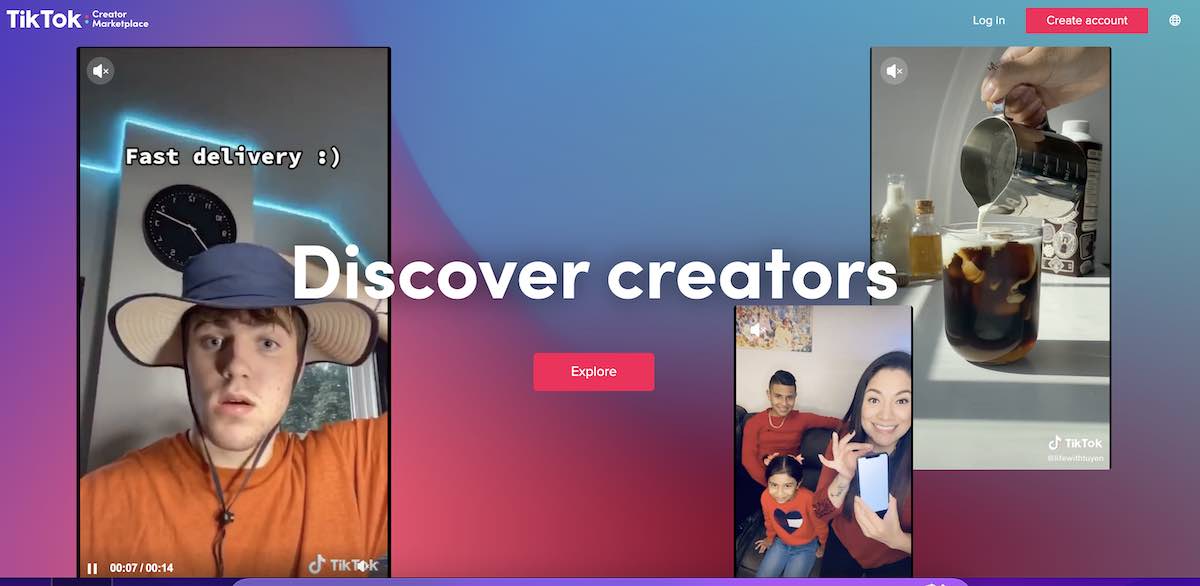
The TikTok Creator Marketplace is the platform’s official hub where brands can connect with creators. You can collaborate on advertising content and get paid for your efforts here. However, to join, there are a few prerequisites to keep in mind.
Cameo started out with celebrities selling personalized video messages to fans. Celebrities maintain complete control over which requests they accept and make sure every video aligns with their personal brand. Now influencers are hopping on board too.
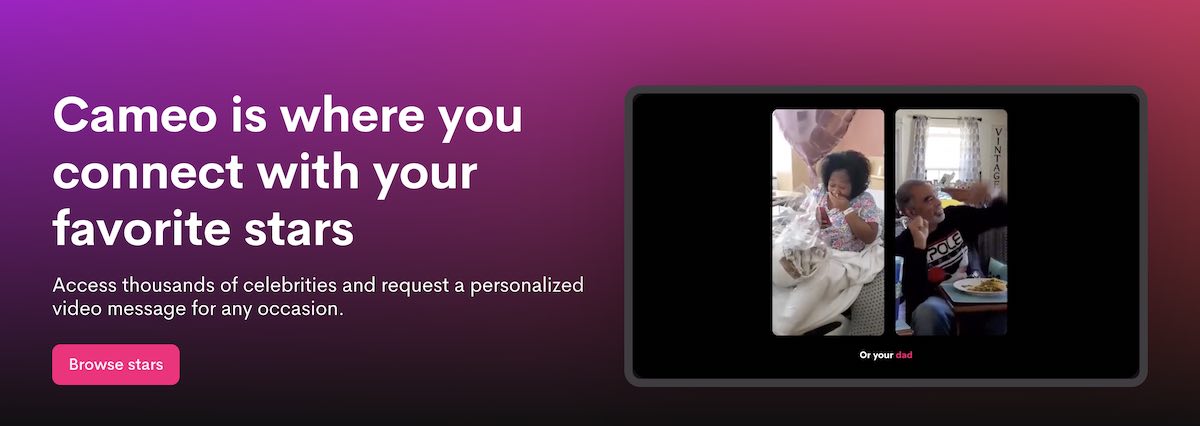
The platform compensates well for 30-second videos. But to see significant earnings, creators need to produce a large volume of these brief videos. Cameo also presents an opportunity to generate income through its pay-per-message chat feature. For a $19.99 fee, fans can send a short message to their chosen influencer, who, in turn, responds
The actor Brian Baumgartner, known as Kevin from “The Office,” netted over $1,000,000 on Cameo in 2020.

For creators on Cameo, building a recognizable personal brand is essential as you’ll be selling personalized video shout-outs to fans. The more renowned or popular you are, the higher you can set your price.
Patreon is like your very own online clubhouse. It’s a place where you can host your content behind a virtual ‘entry fee.’ Your biggest fans pay a subscription fee to get exclusive access.
Keep in mind, the more enticing your exclusive content and perks, the more fans will want to become your patrons.
Patreon is all about offering exclusive content to your subscribers. Success on this platform relies on actively building a strong, loyal fan base and consistently delivering high-quality, unique content that can’t be found elsewhere.
Creator marketing platforms like #paid act as digital matchmakers between creators and brands looking for promotion.
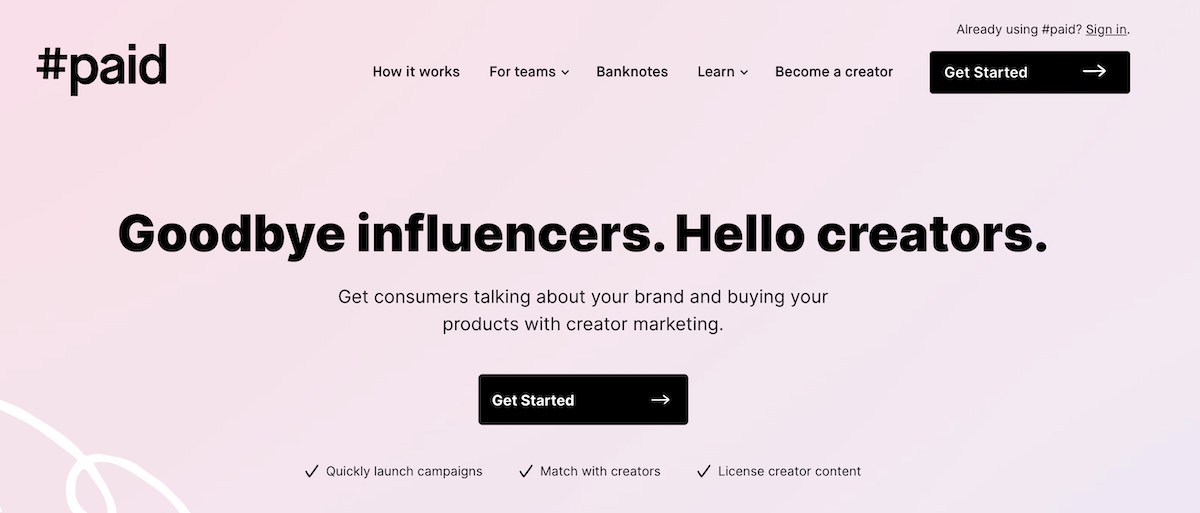
Video content creators can monetize by creating sponsored content, product review videos, or other user-generated content.
Here are a few noteworthy creator marketing platforms to monetize your video:
With many options for video monetization at your disposal, it’s essential to understand how they work and how to navigate them effectively. Let’s explore the most popular ways that creators make money with their video content.
Advertising is a popular choice for creators to make money from their videos. Video ads can take various forms—pre-roll, mid-roll, and post-roll ads, overlay ads, or sponsored cards. The key to increasing ad revenue lies in creating content that keeps your viewers engaged and watching. Remember, the longer they watch, the more ads they will likely see.
While earnings can vary greatly, a creator with a moderately successful channel can make a few hundred to a few thousand dollars monthly from ad revenue alone. A shining example is the popular YouTuber Linus Sebastian of Linus Tech Tips, whose tech videos have amassed billions of views, translating to substantial ad revenue.
Deals can range from product placements and shout-outs to full video sponsorship. Creating content that aligns with your potential sponsors’ brands is essential to land the right sponsorships. For tips on finding brand deals, check out our YouTube sponsorships guide.
Sponsorship earnings are highly variable, depending on your audience size, engagement rate, and the sponsor’s budget.
If you’re an expert in a specific field, creating online video courses could be profitable. You curate your knowledge into a comprehensive course, set your price, and earn revenue every time a user pays for your course.
Creating video courses allows you to harness your expertise, connect with your audience, and establish a steady income stream. Teachable is a top platform for this approach, hosting a variety of successful creators.
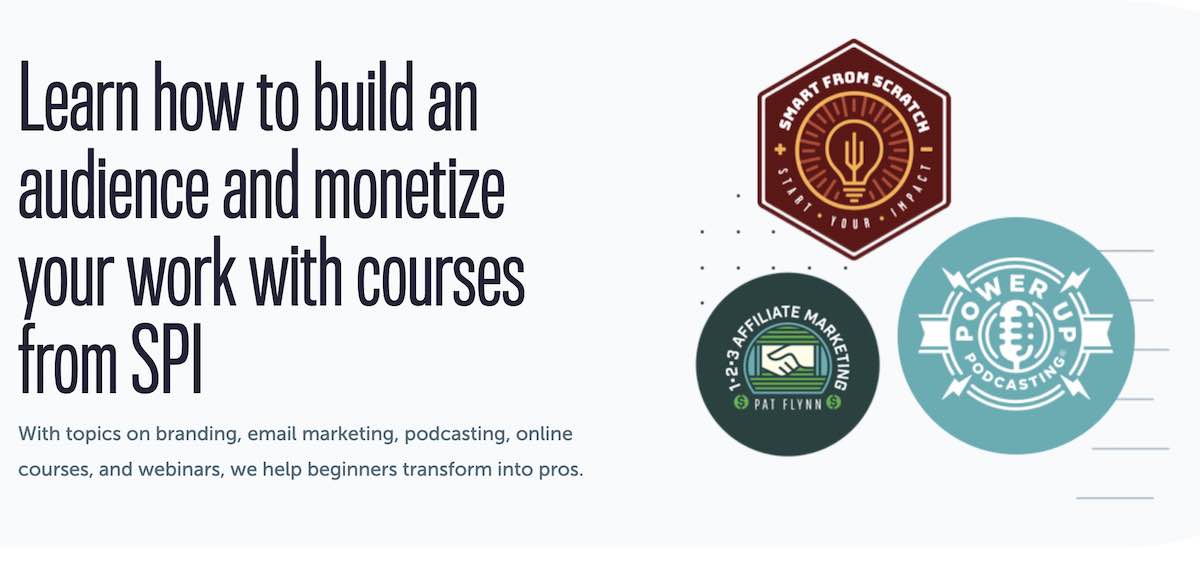
Pat Flynn, the creator of “Smart Passive Income,” usesTeachable to sell his courses on entrepreneurship.
With the right tools and mindset, you can create videos and build a sustainable source of income. The path to effective video monetization lies in aligning your passion, knowledge, and audience needs in a way that creates value for all.
Creators use Teachable’s platform to create and sell online video courses and other digital products. See how Teachable can help you monetize your knowledge by testing out a free plan.
If video content meets the platform’s rules and regulations, you can monetize almost any high-quality, engaging content. Some examples include:
There’s no definitive answer, as it can vary based on the platform. For example, you need at least 1,000 subscribers and 4,000 public watch hours in the last 12 months on YouTube. However, on platforms like Teachable, you can earn from your first video course.
Video monetization takes many forms: advertising revenue, brand sponsorships, subscriptions, and online video courses. The right mix will depend on your content, audience, and personal brand. A fitness trainer might succeed in selling online courses. A gaming enthusiast might prefer using Twitch to earn through brand sponsorships and ad revenue.
The payout greatly varies from platform to platform and largely depends on the creator’s content, audience size, and engagement rate. Some creators make a significant income on YouTube due to its massive audience, while others succeed on Teachable, selling online courses. It’s about finding the platform that fits your content style and monetization strategy best.